

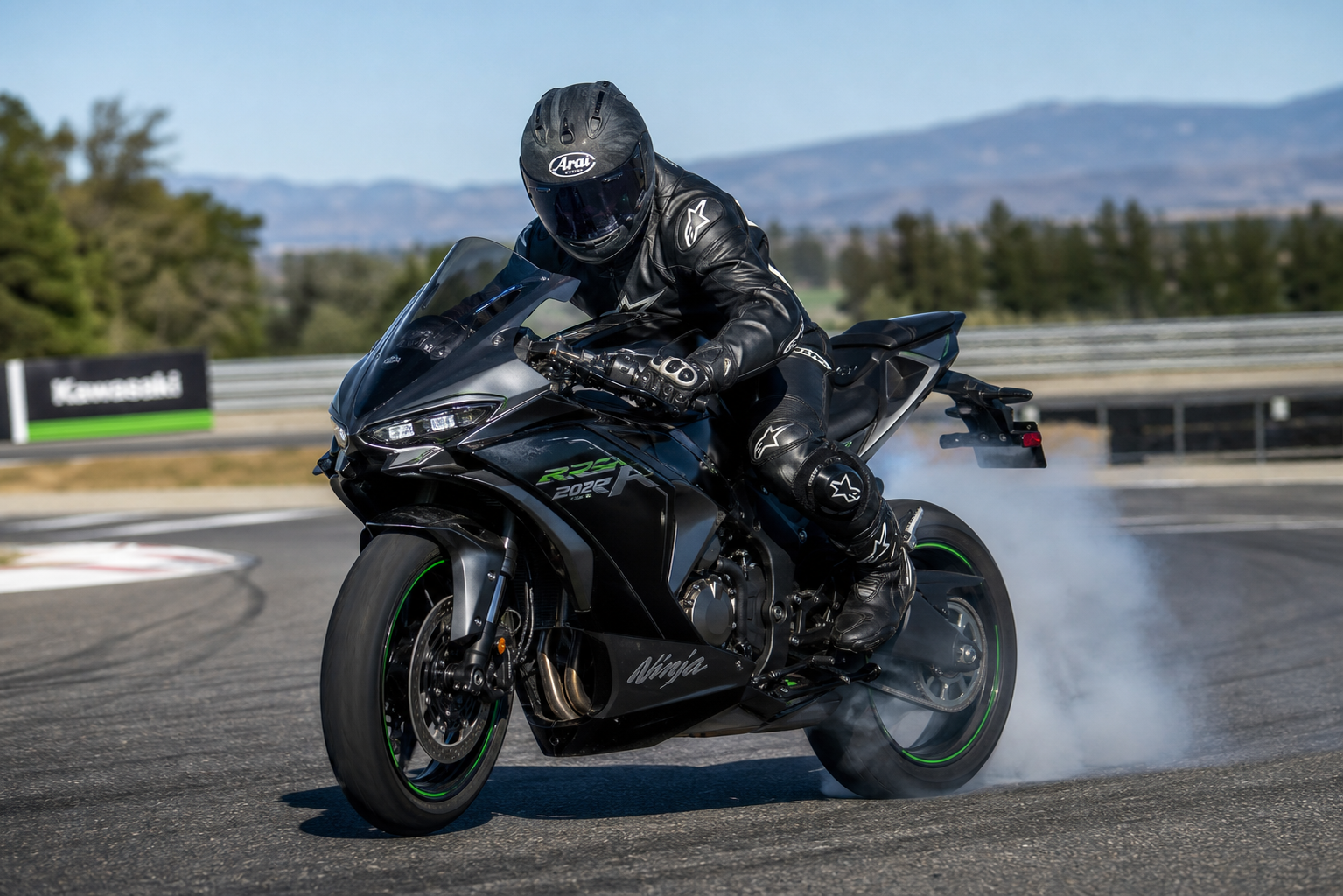
Drifting a motorcycle is not a stunt you improvise. It’s a set of linked inputs: bike setup, body position, control timing, and calm correction. These are advanced handling techniques meant for closed-course practice under supervision. Read this article to learn step-by-step, safe drills that build competence and control.
WHO THIS IS FOR
This guide targets experienced street or track riders who already control wheelies, stoppies, and fast cornering. If you’re still learning basic cornering or emergency braking, commit to those fundamentals first. Drifting multiplies risk if fundamental skills aren’t solid.
LEGALITY AND SAFETY FIRST
Drifting on public roads is illegal and dangerous. Use a dedicated track, skidpad, or empty closed facility with medical cover and marshals. Always wear certified protective gear: full-face helmet, CE-rated armored jacket and pants, gloves, and boots. Carry a charged phone and a basic first-aid kit in the support vehicle.
RIDE MODE, ELECTRONICS, AND WHY THEY MATTER
Modern 2026 bikes have sophisticated traction control, wheel-speed sensors, and multiple ride modes. These systems can help you learn controlled rear slip—but they can also cut power abruptly if set too intrusive. For learning, select a mode or traction-control intervention level that allows slip while preventing a full rear-wheel slide. Learn your bike’s behavior in low-speed, low-risk slides first.
ESSENTIAL BIKE SETUP
Small setup changes make large differences in how a bike slides.
- Tires: Use clean, warm tires suitable for the surface. Do not attempt drifting on worn or glazed rubber.
- Suspension: Slightly firmer rear rebound damping helps the bike settle during a drift and prevents the rear from kicking back unpredictably.
- Chain and sprockets: Ensure correct tension and smooth engagement—no slack or tight spots.
- Brake lever and pedal: Check feel and free play. The rear brake must be predictable for trail-brake and drift modulation.
- Controls: Ergonomics matter. Make small handlebar or peg adjustments so you can shift weight smoothly without overreaching.
RIDER POSITION AND WEIGHT MANAGEMENT
Body placement controls the bike’s yaw and balance. Move weight slightly rearward at drift entry. Keep your inside knee tucked and your outside knee pressed to the tank; this stabilizes the chassis. Eyes up. Your head should point where you want the bike to exit the drift, not at the front wheel.
THE FOUR PRIMARY DRIFT INITIATION TECHNIQUES
There are multiple ways to initiate a controlled drift. Choose one and practice until you control it before combining methods.
- Power over: Enter the corner with a settled chassis. Open the throttle sharply to break rear traction. Maintain a controlled throttle and counter-steer to hold the slide.
- Clutch-kick: Briefly snap the clutch while at steady throttle. The sudden surge to the rear wheel forces slip. This method gives a sudden breakaway and requires fast corrective inputs.
- Rear-brake lift: Use a short, firm tap on the rear brake while maintaining some throttle. This unsettles the rear and lowers the traction threshold without a massive power spike.
- Trail-brake to power: Carry a light rearward weight, trail the front brake into the turn to destabilize, then progressively apply power to induce the slide.
THROTTLE, STEERING, AND BRAKE INTERACTIONS
Think of the controls as a trio that must be balanced. Throttle increases slip; steering determines yaw; rear brake tames the slide. When the rear starts to break free, reduce the throttle slightly to stop a highside, then reapply smoothly to continue. If the front feels light, reduce lean and add a touch more front-end weight by easing the throttle and increasing counter-steer pressure.
PROGRESSIVE DRILLS TO BUILD CONTROL
Do not jump into full-speed slides. Use a progressive curriculum.
- Drill 1 — Low-speed rear slide: On a skidpad, practice holding a short rear-wheel slide at low speed using a gentle throttle blip. Focus on corrective inputs only.
- Drill 2 — Controlled angle hold: Increase throttle gradually and maintain a steady angle using counter-steer. Work on smooth throttle modulation.
- Drill 3 — Entry and exit timing: Practice initiating with a clutch-kick or rear brake then smooth the transition back to full drive for the exit. Look where you intend to go, not at the front tire.
- Drill 4 — Speed and gear selection: Learn which gear gives the rear wheel predictable torque response. Practice downshifting cleanly before a slide to avoid abrupt engine braking.
COMMON MISTAKES AND HOW TO FIX THEM
Learning from error is faster than avoiding it entirely.
- Sudden full throttle when the rear kicks out: Fix by practicing small, incremental throttle increases. If the rear snaps wider, ease off and reset.
- Riding on the brakes too long: The bike can hang up. Use the rear brake only in quick taps for initiation or modulation.
- Over-leaning or looking down: This unloads the front. Keep vision high and shoulders square to control the front end.
- Excessive speed on first attempts: Start slow. Speed amplifies consequences.
USING TRACTION CONTROL AND ABS SMARTLY
Set traction control to a less intrusive setting that allows controlled slip while preventing abrupt engine cuts. If your bike has an adjustable ABS rear-wheel function or skid control, test how it intervenes at low speeds before attempting full slides. In some cases, turning off rear ABS during closed-course practice gives cleaner rear-brake modulation—but only do this with experienced supervision.
MAINTENANCE CHECKS AFTER DRIFT PRACTICE
Drifting is mechanical stress. Inspect chain, sprockets, and rear tire for uneven wear or heat marks. Check fasteners on swingarm and footpegs. Monitor brake-pad wear; short, sharp rear-brake taps accelerate wear. Keep a maintenance log after every session.
HOW TO PRACTICE WITHOUT DAMAGING THE BIKE
Use a sacrificial rear tire if you plan multiple sessions in a day. Replace clip-on grips and footpeg rubbers if they start to degrade. Keep coolant and oil checked—hard lateral slides increase thermal load. Use a rear stand or trailer to transport the bike when tires are worn; do not ride long distances on drift-tuned rubber.
MENTAL APPROACH AND RISK MANAGEMENT
Stay calm. Drifting is timing. Panic inputs cause highsides. If a slide gets out of control, prioritize reducing throttle and straightening the bars to regain grip. Never chase angle for the crowd. Respect the learning curve and the people around you.
NEXT STEPS FOR SKILL BUILDING
Work with a qualified instructor. Video your runs to analyze throttle curves, line choice, and body position. Use incremental challenges: tighter circles, longer slides, combination corners. Build an emergency plan with your group: clear signaling, an agreed abort procedure, and a tow plan for a disabled bike.
FINAL THOUGHTS
Drifting on two wheels is controlled chaos—rewarding when performed cleanly, dangerous when rushed. Invest time in setup, slow progressive drills, and disciplined practice. If you respect the machine and the limits of traction, you’ll develop a level of feel and control that improves every other aspect of your riding.


0 Comments