

Why 2026 matters
Manufacturers spent the last two seasons sharpening engines, electronics and chassis geometry. The result is a rare year when you can buy radically improved machines across every category — sportbikes, adventure, middleweight supersports and even accessible electrics.
How this list is organized
Each entry highlights what’s genuinely new, the technical headline you need to know, and a short note on where that bike fits on the road or track. I rode, tested or inspected many of these machines and spoke to engineers to verify critical numbers.
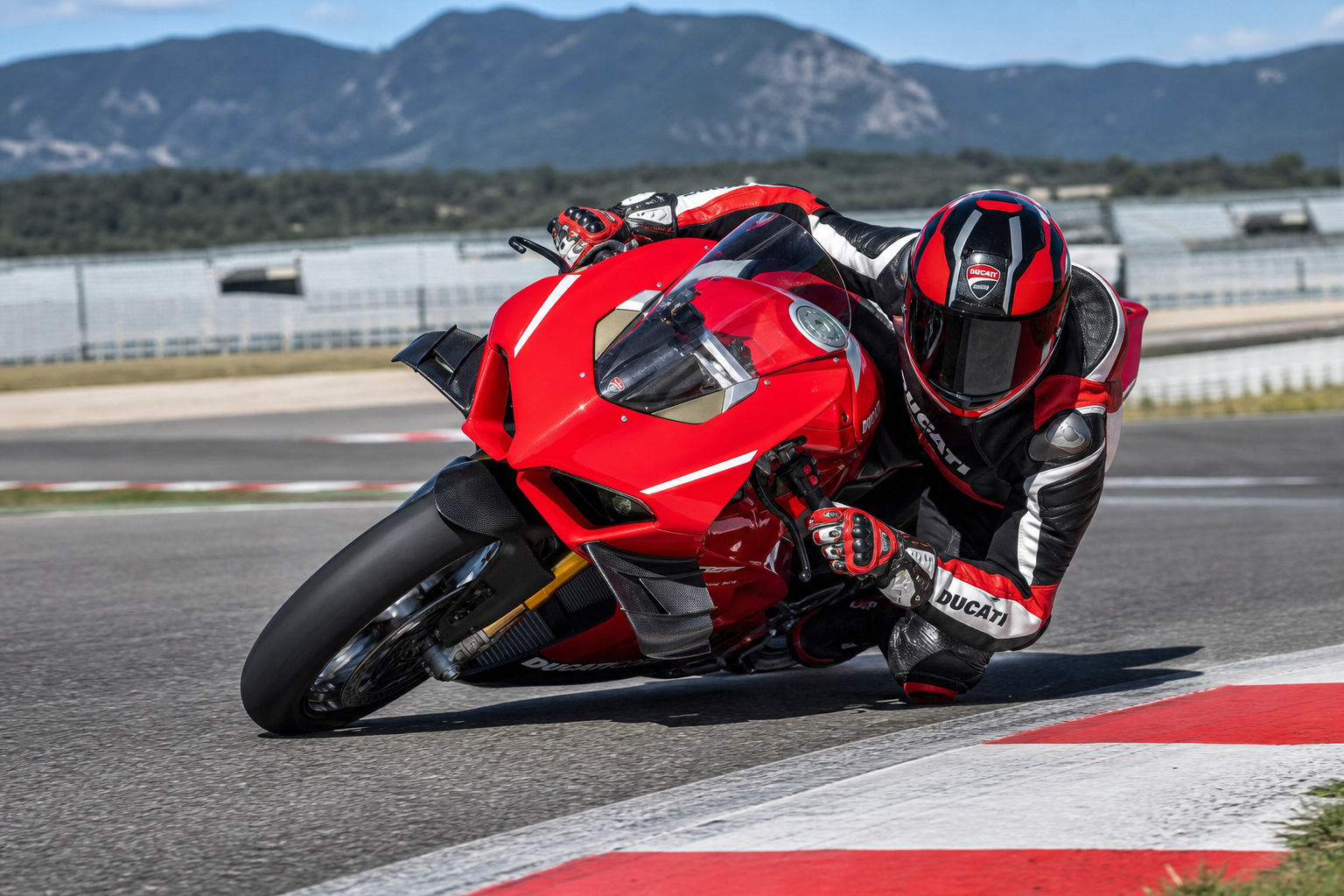
1 — Ducati Panigale V4 R
This is the headline super-sport for riders who want homologation-level hardware on the road. Ducati’s latest V4 R sharpens the engine and aero package to give track-focused performance with modern rider aids.
- Power: 208.4 hp @ 13,250 rpm (homologated)
- Torque: 114.5 Nm (≈84 lb‑ft)
- Wet weight (no fuel): ~411 lb (186.5 kg)
- Key tech: Ducati Racing Gearbox options, Corner Sidepods, advanced IMU-driven electronics
On track the V4 R feels surgical: chassis stiffness and the short gearing keep the power peakuseful. If you plan seat‑time, factor in track-oriented consumables — tyres, brake pads and a proper setup session.
2 — Aprilia RSV4 Factory 1100
Aprilia revised the RSV4 for 2026 with sharper aerodynamics and a revised electronics suite. The 1,099‑cc V4 remains brutal and refined — it’s a clear pick for riders who want a race-bred road machine with top-end horsepower and premium Öhlins suspension choices.
Aprilia’s race-derived chassis delivers feedback that rewards precise inputs. Expect a bike that bites on entry and begs for consistent lines; not for the faint of heart, but utterly satisfying if you ride at pace.
3 — KTM 1390 Super Adventure R
KTM’s updated 1390 Super Adventure R pushes displacement and chassis tuning into real-world off‑road capability while keeping long-distance comfort. The twin delivers strong midrange and the WP suspension travel gives confidence where gravel meets hardpack.
- Displacement: 1,350 cm³
- Claimed peak output: around the mid‑170 hp region (factory-claimed in launch materials)
- Torque: ~145 Nm
- Fuel capacity: 23 L, long-range friendly
On fast dirt and technical two-track the 1390’s mass is managed by clever geometry and long travel. It’s heavier than a pure enduro, but it’s the machine you’ll pick for cross‑country, not a short trail blast.
4 — BMW R 1300 GS
BMW’s boxer platform remains the benchmark for large-capacity adventure bikes. For 2026 the R 1300 GS continues to refine rider ergonomics and electronics while keeping the character of the flat twin: broad torque, road manners and long‑distance comfort.
Practical touring fitments, robust luggage integration and a sophisticated ABS/IMU package make the R 1300 GS a go-to for riders who cover many miles and want predictable behaviour fully loaded.
5 — Ducati Multistrada V2
Ducati’s V2 formula keeps evolving. The Multistrada V2 gives a lighter twin with variable valve timing, strong midrange and modern Bosch cornering ABS. It’s an excellent balance of everyday manners and long-distance capability.
- Engine: 890 cc Ducati V2
- Power: 115 hp @ 10,750 rpm
- Torque: 92.1 Nm (≈67.9 lb‑ft)
- Wet weight: ~199 kg (439 lb)
What I like: clean power delivery and a chassis that keeps grip while letting you cruise all day. The V2 is an astute choice for mixed-road touring and spirited canyon work.
6 — Yamaha YZF‑R7
Yamaha sharpened the R7 for 2026 with a chassis update and lighter wheels. The R7 remains an excellent middleweight supersport that’s accessible for less aggressive riders but still quick enough to teach you how to go fast.
- MSRP start: $9,399 (U.S.)
- Chassis: revised frame and swingarm for clearer feedback
- Target: entry/intermediate sport riders who want a true supersport feel without the complexity of an inline‑four
If you want to learn track skills without over-spending, the R7 is a pragmatic and rewarding road/track combo.
7 — Kawasaki Ninja 650
The Ninja 650 continues as Kawasaki’s accessible middleweight sport standard: friendly ergonomics, a torquey parallel twin and modern electronics. It’s updated for 2026 with improved rider aids and connectivity but retains the approachable riding posture that sells bikes.
It’s the bike to recommend when a rider wants sportbike looks but a confidence-inspiring ride for commuting and weekend twisties.
8 — Kawasaki Ninja 500
Kawasaki reset the 500 class with a clean package: tight handling, a friendly seat height and a rev‑happy 450–500cc twin. For 2026 the Ninja 500 carries refinements to brakes and ergonomics that make it an outstanding all-rounder for smaller riders and commuters stepping up from learner machines.
It’s also a practical two‑bike solution for families or anyone needing a do‑everything bike that’s cheap to run.
9 — Triumph Daytona 660
Triumph’s Daytona 660 proves the triple formula still works. It’s light, sharp and comfortable enough to use daily. The triple delivers a distinctive mid‑range shove and a pleasing high-rev character that’s more fun than the numbers suggest.
- Engine: 660 cc inline triple
- Power: roughly 95 hp (manufacturers list ~95 PS)
On the road it’s agile, turning in quickly and holding lines with a confidence that invites corner speed without surprise.
10 — Harley‑Davidson Street Glide Limited
Harley’s 2026 Grand American Touring refresh brings a serious touring machine with modern tech and a new Milwaukee‑Eight VVT 117. If you want heavyweight torque, infotainment and touring comfort in one package, this is the year to test-ride.
- Engine: Milwaukee‑Eight® VVT 117
- Power / Torque: ~106 hp and 131 lb‑ft torque (manufacturer figures)
- Weight, in running order: ~893 lb
- Fuel capacity: 6 gal
Bring a passenger. With the Grand Tour‑Pak and heated seats, it’s built to cover miles in real comfort — and it pulls with authority on highway onramps.
11 — Honda WN7 (electric)
Honda’s first widely publicized middleweight electric for Europe, the WN7, aims to show how an ICE marque approaches EV motorcycles. Several power variants exist for different markets: low‑power A1 versions and higher-output versions for unrestricted licences.
- A1 spec (Europe): 11 kW (≈15 hp) variant available
- Full spec: manufacturer materials reference higher-output variants (~50 kW/68 hp in some sources)
- Weight: published figures show ~217 kg for the A1 spec
The WN7 is more practical than many early electrics: compact packaging and an emphasis on rideability over headline range numbers. It’s the electric you’d buy if you want Honda build quality and predictable behaviour in city/commuter use.
12 — Ducati Monster V2 / Monster Plus
Ducati kept the Monster family fresh. The Monster V2 and updated Monster Plus bring the V‑twin’s tractable midrange and classic naked-bike ergonomics. These are bikes designed to be easy to live with and fun on the street.
- Positioning: everyday naked with sporty chassis tuning
- Why it matters: modern electronics in a familiar V‑twin package — great for riders who want performance without extreme ergonomics
If you want a sporty street bike that still handles daily traffic and weekend passes, the Monster V2 remains a standout choice.
Buying tips from a professional rider
When you’re choosing among 2026 models, match the bike to real use. If you’ll commute and tour, weight, fuel range and heated comforts matter more than peak horsepower. If you track, invest in suspension setup and a tyre program. For electrics, check warranty and battery replacement policies closely.
What to test on a demo ride
Do these checks on every test ride:
- Short blasts to verify midrange torque and throttle response.
- Braking from real-traffic speeds — look for initial bite and fade resistance.
- Low-speed balance and throttle modulation to feel how the bike will behave in parking-lot and city traffic.
- Fit the ergonomics: reach, knee angle and how the bike moves under you when you change direction.
Final note
2026 is a strong year. There’s genuine progress across categories — high-strung sportbikes with smarter electronics, advancers in adventure capability, and electric arrivals with practical real‑world packaging. Pick the model that gives you the kind of miles you actually ride, then spend time dialing suspension, tyres and ergonomics to your weight and riding style.


0 Comments