

Why 2026 matters for riders
Electric motorcycles stopped being a curiosity years ago. This season they arrived with hardware and systems that change how you approach throttle, brakes, and corner speed. That means a new set of rider skills — not just new machines. Expect heavier mass from large battery packs, instant torque, sophisticated IMU-driven rider aids, and charging behaviors that influence route planning. I’ve ridden both urban specimens and track-tuned EVs this year; the techniques below come from real laps, long-day commutes, and hard corner sessions.
Key 2026 innovations you must understand
Knowing the tech is the first step to riding it well. Below are the developments that have the biggest impact on handling and control.
Solid‑state battery packs (real-world effects)
Some makers introduced solid‑state packs in small-volume production for 2026. For example, Verge’s TS Pro is offered with a Donut Lab solid‑state pack the company lists at about 33.3 kWh and claims up to 370 miles in ideal conditions; the same program advertises ultra-fast charging that gives a very large range gain in roughly ten minutes. The practical effect for riders: much lower charging anxiety and lighter thermal management limits, but still expect a dense, heavy battery low in the chassis that changes inertia through corners.
High torque, instant response
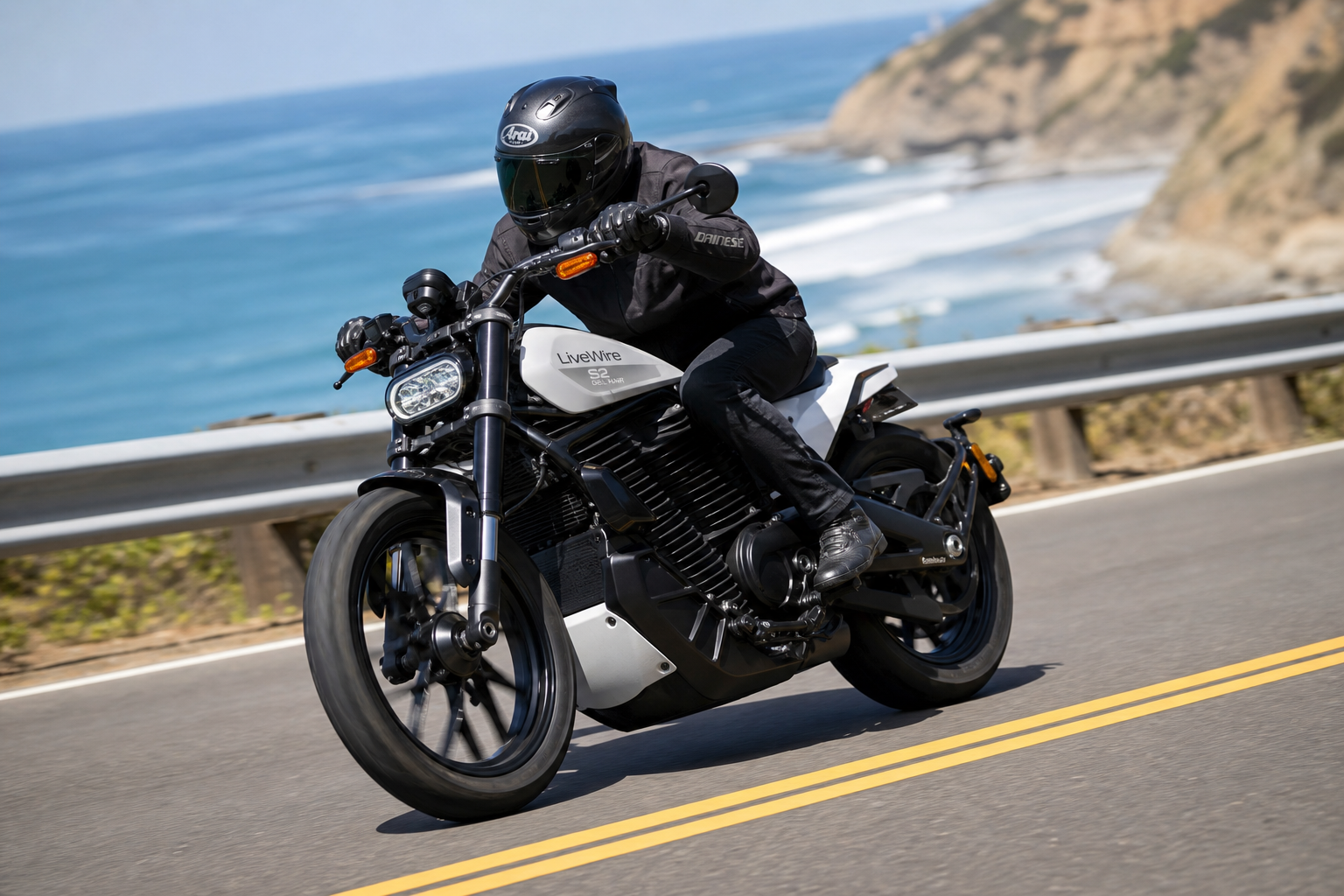
Electric motors deliver near‑instant torque. That’s thrilling — and unforgiving. Bikes like the LiveWire S2 Del Mar pair instant torque with usable chassis design: LiveWire publishes around 194 lb‑ft of torque and ~84 hp (63 kW) for the S2 Del Mar, producing strong acceleration while remaining controllable thanks to electronics. Learn to treat throttle inputs as a finely graded control, especially mid‑corner.
Advanced IMU, cornering ABS and integrated traction control
Lean‑angle aware ABS and traction systems are standard on many 2026 models. These systems use a multi‑axis IMU to modulate braking and power while you are leaned over, which changes how and where you can safely apply brakes and throttle. The tech reduces one dimension of risk — but it doesn’t replace rider inputs or good body position.
Regenerative braking as a riding tool
Regen systems are stronger and more tunable than early EV bikes. You can use regen to scrub speed smoothly before corners, recuperate energy on long descents, and stabilize the chassis. The trick: match regen intensity to the track or road surface and to how the ABS and IMU interact on that bike.
Practical ride techniques for modern electric bikes
Below are techniques I teach in advanced clinics adapted specifically for electric machines. Practice these in a safe environment before using them in traffic or on track.
Throttle finesse and progressive application
Because torque is immediate, develop a soft first 10–20% of throttle application. On the street, use small roll‑on inputs coming out of corners — treat the throttle like a brake when you are learning. On the track you can be more aggressive, but only once you’ve logged consistent laps and understand how the bike’s traction control and regen interact at differing lean angles.
Use ride modes deliberately
Manufacturers provide multiple ride modes for a reason. Start in the softer urban mode for street learning. For example, LiveWire’s S2 Del Mar has ride settings and adjustable regen; use the most conservative settings while you learn weight transfer and corner exit power. Switch modes only after you’ve practiced transitions at speed and feel comfortable with the bike’s intervention thresholds.
Braking with IMU and regen present
Modern cornering ABS lets you brake later and more confidently. Still, the best technique blends systems and feel:
- Approach: Set your line and use a firm, progressive front lever input while maintaining a small rear brake bias to stabilize chassis pitch.
- Regen assist: In moderate regen settings, feather the throttle to engage light regen before the turn to reduce speed without upsetting the suspension. Avoid full regen on the entry if it lifts the rear or causes abrupt load shift.
- Lean braking: Trust that cornering ABS will intervene, but keep inputs smooth. Sudden lever snatches still unsettle the bike.
Body position and mass management
Electric bikes often carry more unsprung and rotational mass. Use your body to reduce steering inputs and control weight transfer: move your upper body inside the turn slightly earlier, keep a soft grip, and let the bike rotate under you. Small, early position changes beat last‑second corrections. This reduces the need for steering forces to overcome battery inertia.
Tire prep and suspension setup
Heavier bikes need different suspension and tire pressures than lighter gas bikes. Start with manufacturer recommended pressures for loaded weight, then drop pressure incrementally for more mechanical grip if the tyre’s temperature profile allows it. For suspension, increase compression damping to control dive under hard regen braking and use a slightly stiffer rear spring to counter additional battery weight low in the frame.
Corner exit strategy
On exit, aim for a gradual, deliberate throttle roll. If you have traction control maps, observe how each level affects wheelspin: low TC allows more slip for aggressive exits but requires precise inputs. Use a predictable throttle gradient — imagine drawing a smooth curve with your wrist — and avoid instantaneous openings until you trust the system’s tune.
Long trips and charging—route planning with confidence
Range and charging behavior influence real-world technique just as much as chassis tech.
Plan around usable range, not claimed range
Manufacturers’ range numbers are useful starting points. In real use, speed, wind, and topography reduce range significantly. For bikes with small fast‑charging packs you can plan short stops often; for bikes with larger solid‑state packs the benefit is fewer stops but heavier mass. Build conservative buffers into your plan and identify multiple charging options along the route.
Fast charging strategy
When you stop for a DC fast charge, the battery’s state of charge and temperature determine how fast you’ll get power. A practical rule: plan for two medium stops rather than one borderline stop and a risky push. On long mountain descents, use regen to avoid overheating brakes and preserve charge.
Maintenance and daily checks that matter for safety
Electric bikes simplify some tasks and create new checks. Make these part of your routine:
- Tire and brake checks: Visual and pressure checks are unchanged — electric bikes still rely on good tires and brakes.
- Battery thermal and coolant: Inspect cooling lines or fins for debris and ensure charging connectors are clean. Follow the manufacturer schedule for coolant service where applicable.
- Software updates: Install OTA updates; they often include critical IMU/ABS and TC tuning fixes that affect handling.
Practice drills to build competence
Skills come from repetition. Run these drills in empty lots or closed courses:
- Progressive throttle roll-on from 20–70% power in a controlled straight line, checking for rear grip changes.
- Short brake‑to‑corner sequences with varying regen settings to feel how regen alters pitch and stability.
- Lean angle braking: apply steady braking while gently initiating a lean to observe cornering ABS thresholds.
Final riding philosophy for 2026 EVs
The machines changed; the rider still matters most. Treat electronics as teammates, not replacements. Respect instant torque, respect mass, and use the new tools — selective regen, ride modes, cornering ABS — to extend your limits safely. Spend seat time learning the interactions between throttle, regen, and IMU aids. When you do, modern electric motorcycles reward you with speed, stability, and a new kind of precision that makes good riders better.


0 Comments