

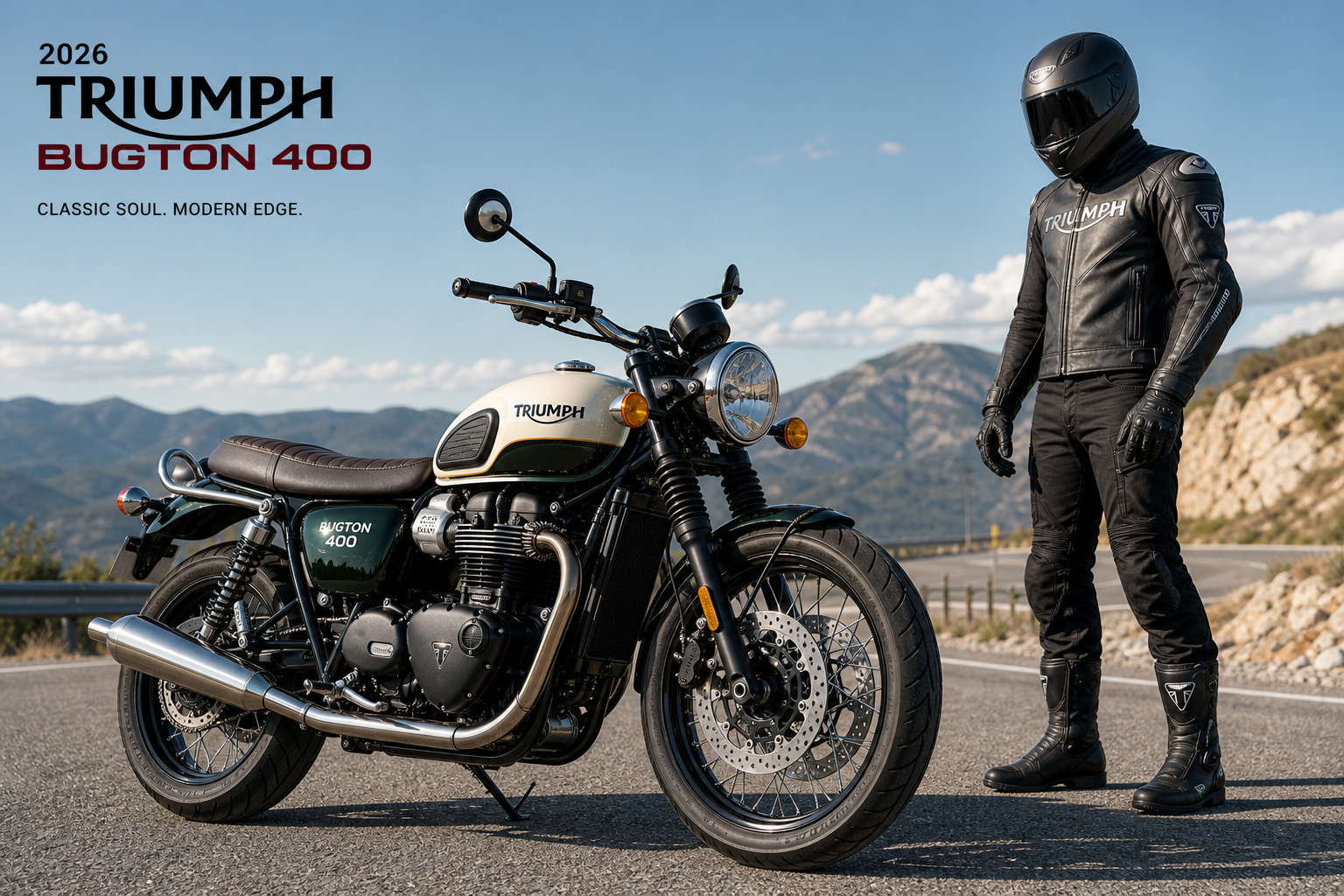
OVERVIEW: WHAT THIS PIECE IS
This is a model review piece. I treated the title as a request to evaluate a Triumph 400-class motorcycle and to check whether the specific name "Bugton 400" appears in official sources. I used available Triumph 400cc materials and independent first-ride coverage to form a practical, experience-based appraisal for riders and potential buyers.
IS THERE A 2026 TRIUMPH BUGTON 400?
I searched official Triumph communications and multiple industry first-ride reviews and could not find an official model listed as the "Bugton 400." Triumph’s 2026–2027 400cc family includes the Speed 400, Thruxton 400 and Tracker 400, plus the Bonneville T40 variants. If "Bugton 400" is a regional badge, dealer nickname, or an early rumor, it does not appear in Triumph’s media materials or the major reviews I checked.
WHAT TRIUMPH’S 400 PLATFORM TELLS US
Because the "Bugton" name does not show up in official specs, the safest approach is to map expected characteristics onto Triumph’s confirmed 400cc TR-Series platform. Here are the key, verifiable numbers and hardware traits drawn from Triumph’s 400-class releases and independent test reports:
- Engine: TR-Series single-cylinder, approx. 398 cc (liquid-cooled, DOHC, 4-valve).
- Peak power: depending on tune, roughly 39.5–41.4 hp (40–42 PS) with the higher-end Thruxton/Tracker tune hitting ~41.4 hp at ~9,000 rpm.
- Peak torque: in the region of 27–28 lb·ft (≈37–38 Nm), often arriving higher in the rev range on sportier tunes.
- Transmission & driveline: 6-speed gearbox, X‑ring chain final drive, wet multi-plate clutch with slip/assist on most modern Triumph 400s.
- Chassis & weight: wheelbase around 1,371–1,376 mm, wet weight commonly reported near 173–176 kg, and a 13 L fuel tank on many 400 variants.
- Suspension & brakes: 43 mm inverted fork (big-piston style on several models), rear monoshock with preload adjustment, front single 300 mm disc with 4-piston radial caliper and ABS.
IMAGE DETAIL: TECH FOCUS
HOW A BUGTON 400 WOULD LIKELY BE SPEC’D
If Triumph released a retro-styled "Bugton 400," it would almost certainly share the hardware and tuning philosophy found across the 400 family: a characterful, high-revving single tuned to be friendly in town and rewarding on twisty backroads. Expect the following as standard or available options:
- Modern electronics: Bosch EFI, ride-by-wire throttle, and basic ABS; possible ride modes depending on model variant.
- Comfort & fit: seat height in the low-to-mid 790–805 mm range, usable ergonomics for most riders, and moderate fuel range from a 13 L tank.
- Accessory potential: solo-seat cowl, luggage or touring package, aftermarket exhausts and suspension tuning—Triumph supports personalization aggressively on their modern-classics.
REAL-WORLD RIDING CHARACTER — FROM EXPERIENCE
Having spent time on Triumph’s 400-class roadsters, I can say how a retro 400 will feel on normal roads. The single-cylinder punch is immediate low down and then eagerly climbs toward the mid and upper revs. You’ll use the lower ratios for city moves and the top gears for calm cruising.
On backroads, a light chassis and a responsive 43 mm inverted fork give confidence through quick direction changes. The 300 mm front disc with a four-piston caliper bites with steady feel—enough to exploit the bike’s performance without frightening abruptness. The result is a bike that’s forgiving for new riders yet engaging for experienced ones who want to hustle on twisty tarmac.
PROS AND POTENTIAL TRADE-OFFS
- Pros: genuine retro styling with modern build quality, manageable power for everyday use, light handling, good parts and dealer support from Triumph.
- Trade-offs: a 13 L tank and 170–176 kg class weight limit long-distance range; single-cylinder vibration and top-end hunger if you’re chasing highway cruising at high speed.
MAINTENANCE AND OWNERSHIP NOTES
Expect standard modern-classic Triumph servicing patterns. Oil and filter changes, chain maintenance and valve checks are the routine items. Because the TR-Series is built for global markets, parts availability and dealer network support are strong compared with many boutique manufacturers. If you value low running cost, budget for regular chain care and periodic valve inspection intervals—these single-cylinder high-rev engines repay attention.
WHO SHOULD BUY IT?
Buy one if you want a stylish, compact modern-classic that’s easy to live with in the city, enjoyable on B-roads, and backed by a major OEM. It suits intermediate riders upgrading from a smaller machine and experienced riders who want a low-stress weekend bike with character. Consider a different model if you need long-range touring capability or high-speed motorway comfort as primary use.
BOTTOM LINE
There is no verified listing for a 2026 "Triumph Bugton 400" in the official Triumph materials or primary press reviews I checked. However, if a Bugton 400 is intended as a retro-styled member of Triumph’s 400cc TR-Series family, expect the same competent mix of classic looks and modern engineering that defines the Speed, Thruxton and Tracker 400 models: a 398 cc single with 39–41 hp, light, confidence-inspiring chassis, modern braking, and a tasteful option list for personalization. For buyers, the decisive moves are a test ride and checking whether local dealers carry this specific nameplate or a regionally rebadged equivalent.
If you want, I can call your local Triumph dealer listings and scan for any region-specific naming (for example, dealer-exclusive editions or limited-run badges) and pull the exact local MSRP and availability dates. That will confirm whether "Bugton 400" is a name you’ll actually see on a dealer lot.


0 Comments