

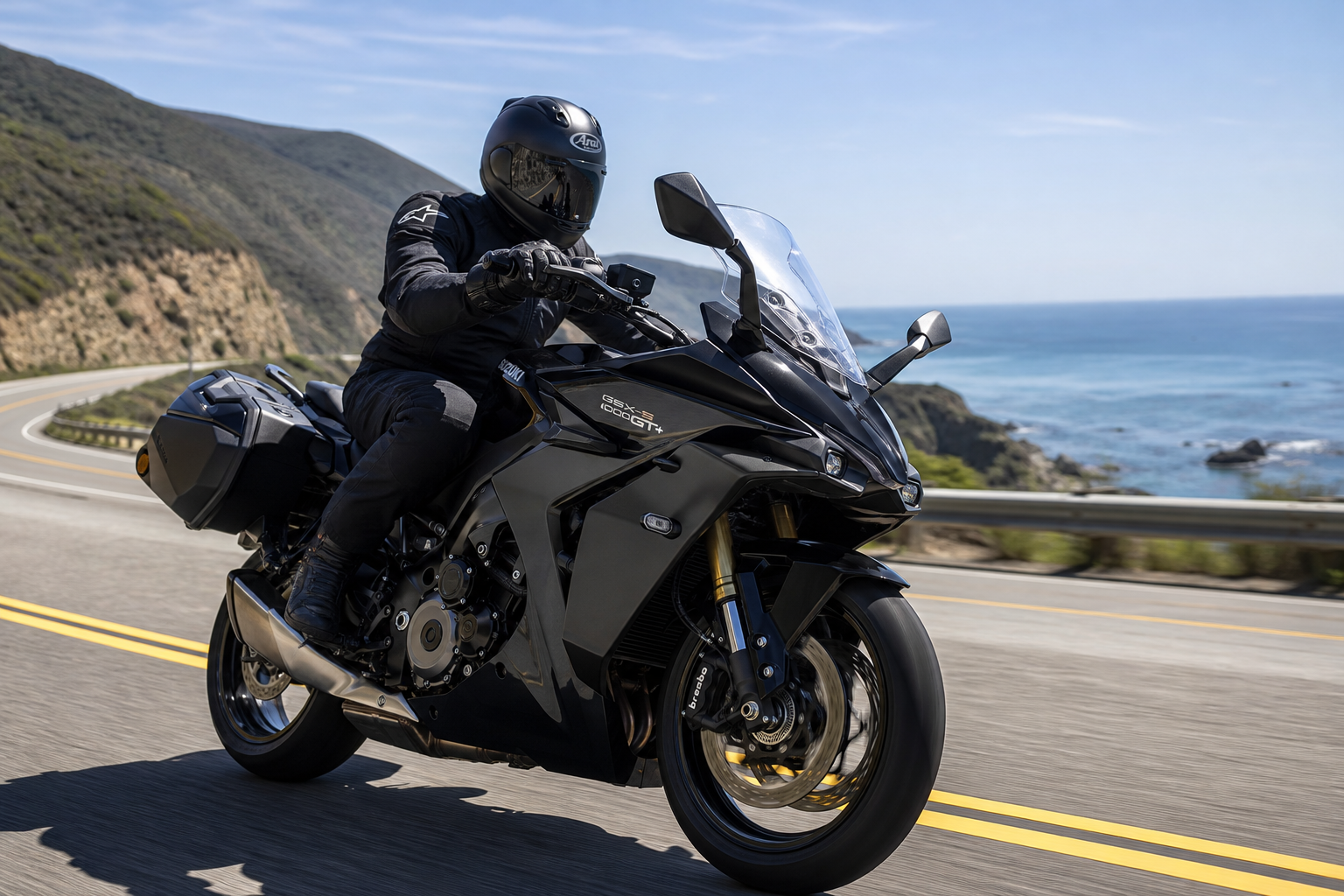
Why this bike matters
The GSX-S1000GT+ takes liter‑bike performance and dresses it for long miles. On mountain switchbacks and open freeway runs, it is meant to feel like a sportbike that learned to carry luggage and calm its temper. This model is not a compromise. It’s a deliberate translation of GSX‑R DNA into a usable, long‑distance package.
Key specifications you need to know (verified)
Suzuki’s published data shows the core numbers clearly: a 999cc liquid‑cooled inline‑four with a 73.4 mm x 59.0 mm bore and stroke and 12.2:1 compression. Peak output is listed at about 112 kW (152 PS) at 11,000 rpm with roughly 106 N·m (≈78.2 lb·ft) at 9,250 rpm. The bike’s curb weight is quoted as 226 kg (498 lb), wheelbase 1,460 mm (57.5 in), seat height 810 mm (31.9 in), and fuel capacity 19.0 L.
Engine behaviour and performance on the road
The long‑stroke GSX‑R‑derived mill is not a screaming, tight‑revving tantrum. It builds revs with authority and delivers a broad spread of torque that makes midrange overtakes effortless. If you like a bike that rewards holding a corner speed without constant downshifts, this one will please you. The bi‑directional quickshifter works cleanly—blips on the downshift are smooth and stop the rear‑end pitching when you’re busy.
Transmission & driveline
The gearbox is a six‑speed constant mesh unit with a slick quickshifter in both directions and a conventional wet multi‑plate clutch. Chain final drive is standard and easy to service. Gear ratios feel long on the top end, which helps cruising rpm and fuel economy on long freeway runs.
Chassis, suspension and braking
The GT+ rides on a twin‑spar aluminum frame with a stout aluminum swingarm. Up front you get inverted forks, fully adjustable, and a link‑type rear shock with good travel numbers for a sport tourer. The wheel/tire combo is 120/70‑17 front and 190/50‑17 rear, shod from the factory with Dunlop Roadsport rubber tuned to this machine.
Stopping power is provided by a pair of 310 mm twin discs clamped by Brembo four‑piston monobloc calipers up front and a 240 mm rear disc with a Nissin single‑piston caliper. The brakes bite progressively and feel confidence‑inspiring when you load the bike—exactly what you want when hauling luggage or a passenger.
Electronics and rider aids
Suzuki equips the GT+ with its Suzuki Intelligent Ride System (S.I.R.S.). Key items include selectable drive modes (SDMS), multi‑stage traction control, a smart cruise control system, and an electronic ride‑by‑wire throttle that smooths power delivery. The instrument cluster is a 6.5‑inch full‑color TFT with smartphone connectivity and clear readouts for settings and navigation prompts.
On the cruise control: it can be set between roughly 30 km/h and 180 km/h when in second gear or higher, and speed adjustments are made via the left handlebar switches. For touring, that feature removes a lot of fatigue on long straights. The traction control has multiple settings so you can dial in a racey feel or a conservative setup for poor roads.
Ergonomics, luggage and touring fit
Ergonomically the GT+ sits between sporty and upright. The bars are slightly raised compared with a pure sportbike, and the footpegs are rearward enough to remain engaging without being punishing on a long day. The standard integrated side cases are well designed—they don’t flap in crosswinds and sit close to the bike’s centerline to keep handling predictable.
The fairing and windscreen provide significant wind protection at speed. For tall riders, the screen could use a touch more adjustment range, but in stock form it cuts buffeting effectively. It should be comfortable for a solid day’s worth of miles with a light luggage load and a pillion.
Handling: what to expect on a backroad
Turn‑in is nimble for a bike that wears touring kit out back. The chassis resists dive under hard braking and remains composed when you transition from throttle to brakes mid‑corner. Because the curb weight sits near 226 kg, you feel the mass, but the bike tracks faithfully. Tap the quickshifter and the rear settles without drama. For a sport‑tourer this is an unusually rewarding handler.
Fuel economy and range
With a 19‑litre tank and realistic mixed‑ride consumption in the region of low‑6 L/100 km figures quoted in spec sheets, expect practical ranges in the 300–380 km band depending on pace. For highway touring the GT+ is efficient enough that frequent fuel stops won’t dominate an itinerary.
Maintenance and real ownership considerations
Suzuki’s layout is conventional and service points are accessible. The chain drive needs routine care; valves and major service intervals align with typical liter‑class sportbikes. The factory electronics are robust but, as with all modern bikes, allow for a slightly higher bill when ECU or sensor work is required out of warranty. Use a reputable Suzuki dealer for major diagnostics—this bike’s systems are tightly integrated.
Who should buy the GSX-S1000GT+?
Buy one if you want near‑supersport performance with real touring comfort and modern electronics at a price that undercuts some European rivals. It suits single riders who occasionally carry a passenger, commuters who need a sporty commute and weekend escape artists who want long‑distance capability without a heavy, cruiser‑like feel.
Shortcomings to be aware of
The ergonomics won’t satisfy riders seeking a fully upright posture muscle‑car style. Some may want a more adjustable windscreen as standard. If you want the lightest possible machine for canyon runs, a dedicated sportbike will still edge the GT+ in pure agility.
Final assessment
The 2026 GSX‑S1000GT+ is a sharp answer to riders who refuse to give up performance for comfort. It retains the aggressive heart of Suzuki’s inline‑four while adding civilized touring manners and a modern electronics package that reduces fatigue on long rides. On the road it feels considered: fast when you ask, patient when you need it. For many buyers that mix is exactly the point.
Quick spec summary
- Engine: 999cc inline‑four, liquid cooled
- Power: ~112 kW (152 PS) @ 11,000 rpm
- Torque: ~106 N·m @ 9,250 rpm
- Weight: 226 kg (498 lb) curb
- Fuel: 19.0 L
- Brakes: Twin 310 mm + Brembo 4‑piston; 240 mm rear
- Electronics: SDMS, multi‑stage TCS, cruise control, bi‑directional QS, 6.5" TFT


0 Comments