

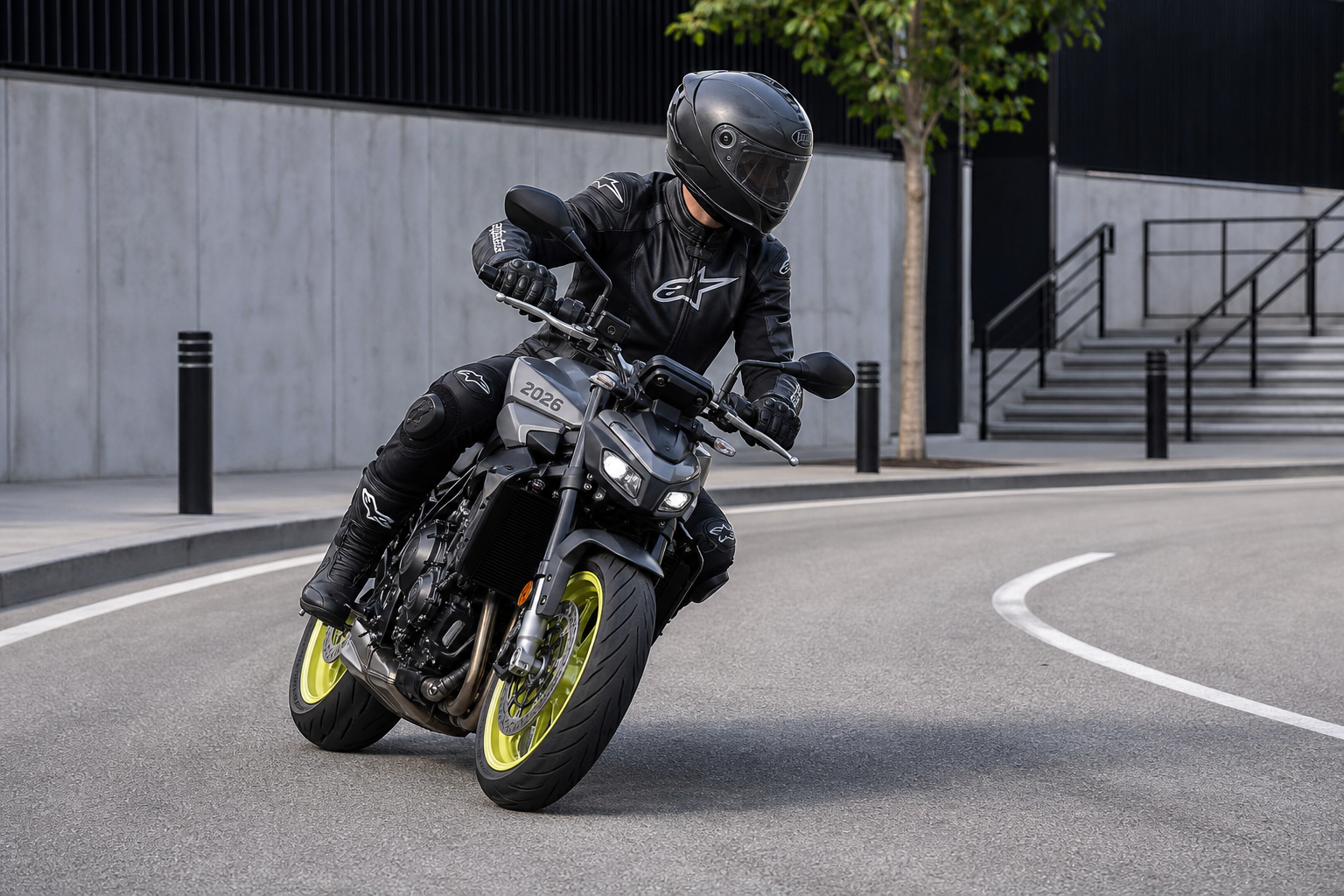
Why Slow-Speed Mastery Matters
Slow-speed control separates confident riders from those who panic when traffic tightens or a parking lot needs finesse. I teach this every week: the same fine-motor skills you use at three miles per hour protect you at thirty. You’ll use these techniques in intersections, parking, driveway exits, off-camber surfaces and when traffic grinds to a halt.
Core Principles — What You Must Own First
Three elements dominate slow-speed success: balance, precise clutch/throttle modulation, and rear-brake control. Lose any one and the bike will surprise you. Start each session with a checklist: loosen shoulders, position feet for support, pick a neutral gear (usually 1st), and confirm proper tire pressure and brake feel.
Controls & Setup
Set the bike to give you feel. Adjust mirror angles so you don’t have to twist your torso. Move the seat or handlebar if necessary for a slightly more upright posture—this gives you leverage when counterbalancing. If your bike allows, lower the idle slightly for very light-clutch riding, but always follow the manufacturer’s spec; many bikes idle commonly in a range that will vary by make and model, so refer to your owner’s manual for the exact number.
Friction Zone and Clutch Technique
The clutch bite is your slow-speed throttle. Learn to find the exact point where the engine begins to pull the bike forward and hold it there without squeezing the front brake hard. Practice with two fingers on the lever for feel; you’ll get finer modulation and far less arm fatigue than with a full grip.
For city U-turns, deliberately place the bike at the bite, then use tiny increments of throttle to feed power while using the rear brake to govern speed. If the engine stalls, you were below the bite—reset calmly and repeat.
Throttle, Rear Brake Coordination, and Engine Revs
At walking pace, the rear brake is your friend. Use it to hold the bike stationary against the engine’s pull and to slow forward roll without upsetting balance. The throttle should be used as a gentle coax—not a shove. For many modern bikes idle sits in a low range; manuals vary, so check yours. The practical rule: keep revs high enough to prevent stalling but low enough to maintain smoothness through the bite point.
Steering: Countersteer Versus Counterbalance
You will hear teachers mention “countersteer” as if it’s only for high speed. The truth from the classroom and the lot: countersteering is effective above roughly 10–12 mph, where a deliberate push on the bar creates the lean you need. Below that speed, steering becomes a mix of direct handlebar input and counterbalancing with your body. At very low speeds, don’t fight the bars—use gentle handle turns, keep your head looking where you want to go, and shift your weight subtly to assist the bike’s balance.
Body Position and Vision
Head position wins more than any other input. Look where you want to go and your hands, eyes, and bike will follow. Keep your chest open, elbows soft, and knees lightly hugging the tank if the bike allows. When executing tight turns, don’t over-lean your torso opposite the turn; instead, keep your weight low and centered.
Foot Placement & Using the Rear Brake
Place the balls of both feet on the pegs when moving. When you expect to stop immediately, put your left foot down only after you have controlled the roll with the rear brake and clutch modulation. Using the rear brake while on the bite gives you micro-control—apply small, steady pressure rather than pumping it rapidly.
Practical Drills — Build Skill with Purpose
Practice like an instructor: slow warm-up, then escalate complexity. Begin with these drills in a quiet parking lot.
- Figure-of-8 — Wide arcs reducing to progressively tighter circles. Work the clutch bite and rear-brake balance.
- U-turn between cones — Start with a larger radius and shrink it every set. Keep revs up to avoid stalling.
- Slalom at walking pace — Focus on visual lead, not the handlebars.
- Controlled stops — From 5–10 mph, practice stopping and immediately restarting smoothly using the friction zone.
- Track-stand (advanced) — Use only after consistent progress with the above; small throttle blips and rear brake balance are required.
Troubleshooting Common Mistakes
If the bike tips inward during a turn, you pulled the clutch too quickly or thumped the throttle. If you’re constantly jerking forward, you’re using the front brake or revving too aggressively. If you stall repeatedly, increase revs slightly in the friction zone. Slow down the practice progression; repeating the same mistake at higher difficulty cements poor habits.
Real-World Scenarios and Application
Use these drills to translate into daily riding: tight apartment exits, roundabouts, traffic queues, and ferry ramps. When a situation calls for certainty, drop a gear, find the bite, and move deliberately. In wet or gravel conditions, increase throttle smoothness and rely more on the rear brake—grip is reduced and sudden inputs cause slides.
Maintenance & Setup That Affect Slow-Speed Handling
Tire pressure, chain tension, and clutch lever free play all change slow-speed behavior. Overinflated tires reduce contact patch feel; a tight chain can make low-speed jerks. Keep the clutch adjusted to factory spec for predictable engagement. Small maintenance checks pay dividends for confidence and safety.
Putting It All Together — A 10‑Minute Practice Sequence
1) Warm-up: 2 minutes of slow figure-of-8s at walking pace. 2) Friction-zone focus: 3 minutes holding the bite and easing forward while using the rear brake. 3) Tight U-turns: 3 minutes, shrinking radius each pass. 4) Controlled stops: 2 minutes of stop-and-start sequences. Finish with notes on what felt unstable and repeat those exact items on your next session.
Final Actionable Checklist
- Check tire pressures, clutch free play, and idle per your owner’s manual before practicing.
- Use two fingers on the clutch for modulation; find the bite and hold it confidently.
- Rely on the rear brake to fine-tune speed; use the throttle as a coax, not a shove.
- Look where you want to go, keep upper body relaxed, and apply smooth, deliberate inputs.
- Progress drills slowly; never rush into advanced techniques until basic balance and modulation are consistent.
My Last Word as an Instructor
Slow-speed skill is not glamorous, but it will make every ride safer and more enjoyable. Practice with intention, keep sessions short and focused, and treat equipment setup as part of the skill. Confidence at low speed translates directly to confidence everywhere else on the bike.


0 Comments