

FIRST IMPRESSION
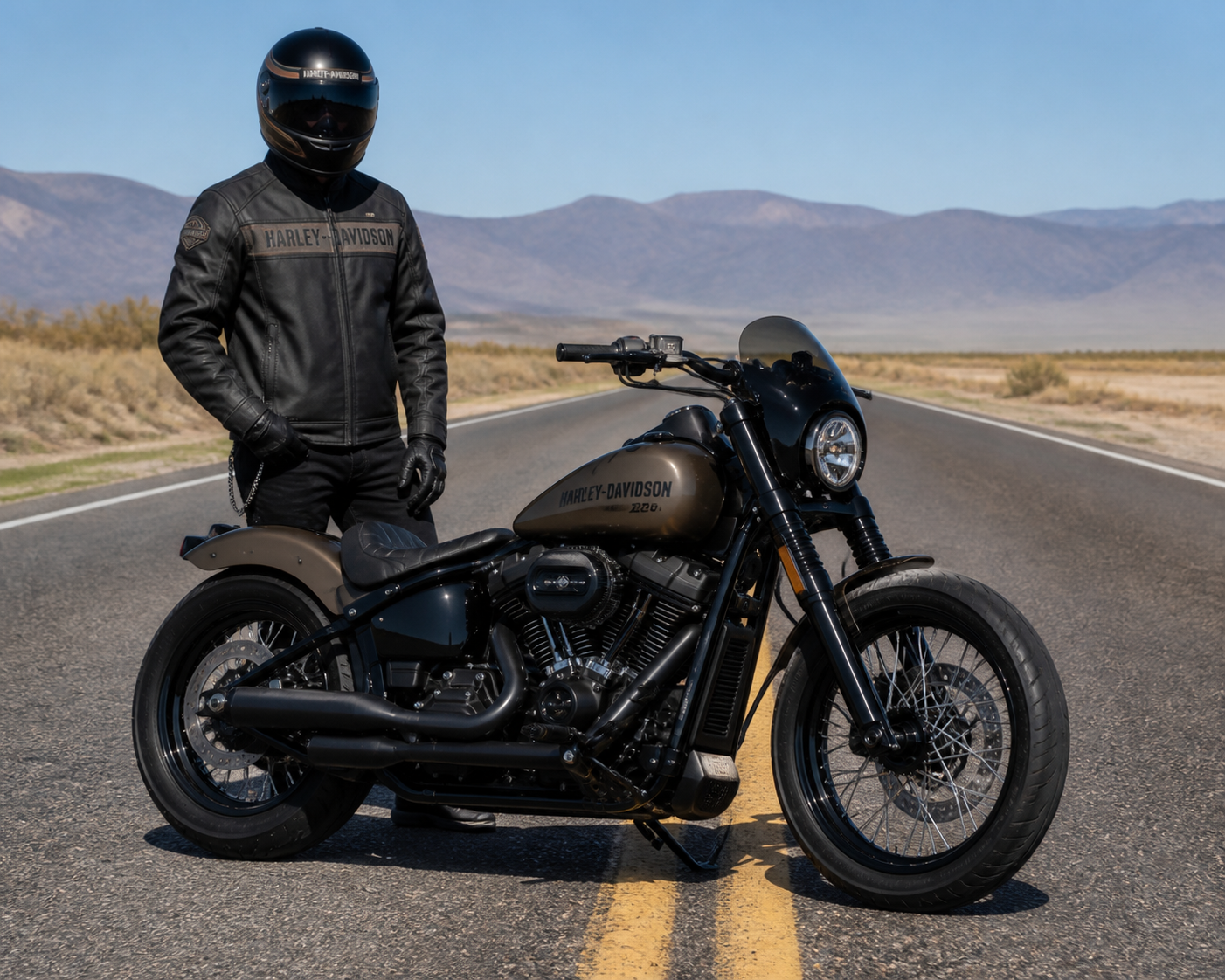
The Deadwood arrives like a photograph from a garage that never left the post-war era—clean lines, raw metal cues, and restrained paintwork. It feels intentionally familiar, but that familiarity is built on modern engineering. You sit low, it growls with unmistakable V-twin authority, and the weight behind you promises composed mass rather than twitchy sport-bike menace.
WHAT IT IS: A BRIEF FRAME
This is a Harley-Davidson cruiser that wears tradition like a work shirt. The core is the Milwaukee‑Eight® 117 Classic V‑Twin: 117 cu in (1,923 cc) displacement, rated at 98 hp @ 4,600 rpm and 120 ft‑lb (163 Nm) of torque at 2,500 rpm (J1349 testing method). The package emphasizes torque, packaging, and style over lap‑time numbers.
DESIGN & HERITAGE
The Deadwood’s styling cues pull straight from the post‑war era: uncluttered fenders, a chopped smoked windshield on the featured trim, and black tubeless laced wheels with 36 bright spokes. It’s not a costume. The bits you see—round intake, “beer can” fork covers, matte and gloss contrasts—are functional parts chosen to echo that garage‑built look while meeting modern expectations.
ENGINE, EXHAUST AND PERFORMANCE
The 117 Classic gives instant shove off the line. Peak torque lands very low in the rev range, so most real‑world passing and corner exits happen without hunting for gears. The engine spec sheet lists a compression ratio of 10.3:1, bore and stroke at 4.075 in × 4.5 in, and a 2‑into‑1 exhaust with catalyst in the header—hardware that keeps the sound full and compliant with emissions rules.
Harley quotes a combined fuel economy figure around 47 mpg with a 5.0 gallon tank. That combination makes the Deadwood a capable short‑tour machine; you can spin up comfortable day trips without constant fuel stops.
CHASSIS, SUSPENSION & WHEELS
Underneath the period look you'll find chassis decisions that favor stability. The wheelbase is 64.2 in, with a rake near 30° and trail around 5.8 in. Those numbers plus the bike’s mass produce confident straight‑line behavior and a steady feel through sweepers.
Up front is a 49 mm dual‑bending valve telescopic fork with dual‑rate springs and aluminum triple clamps; the rear uses a hidden free‑piston coil‑over monoshock with a 43 mm stroke and cam‑style preload adjustment. Lean angles are respectable at about 27° both sides, showing that the Deadwood can be hustled farther into corners than its silhouette would suggest.
BRAKES & TIRES
Stopping duties are handled by a 4‑piston fixed front caliper and a 2‑piston floating rear caliper, with solid rotors tuned for steady feel rather than the last notch of fade‑free performance. Tires are Dunlop Harley‑Davidson Series bias blackwall spec: 130/90B16 front and 150/80B16 rear, mounted on the laced 16‑inch wheels—period correct and confidence‑oriented.
ELECTRONICS AND RIDER AIDS
The electronics suite reads like modern common sense: ABS with cornering enhancement, traction control with cornering functionality (C‑TCS), a drag‑torque slip control system, and optional Tire Pressure Monitoring System. Ride modes are selectable to temper throttle mapping and traction intervention. These systems let the Deadwood keep vintage lines without vintage risk.
ON‑ROAD CHARACTER — HOW IT RIDES
Ride it easy and the Deadwood feels like a proper cruiser: low center of gravity, torquey power delivery, and a relaxed steering geometry that rewards smooth input. Push harder and the motorcycle rewards weight transfer and firm inputs. Because torque is available early, throttle transitions have to be precise in tighter corners; abrupt throttle can upset rear traction if you’re careless. That’s what the traction and drag‑torque controls help manage.
Braking from speed feels linear. The front caliper gives good initial bite and a progressive feel through the lever. It’s not a sport‑bike anchor, but for street use it’s both confidence‑inspiring and predictable—exactly what you want on a heavy cruiser.
ERGONOMICS & DAILY USE
Seat height is low: Harley lists 25.5 in (laden) and reports note a roughly 26.5 in unladen figure in some trims. At that height most riders find footing easy. The running weight comes in at about 686 lb, so you’ll notice the mass at parking speeds and during low‑speed maneuvers. The 5‑gallon tank plus 47 mpg estimate gives a good real‑world range before you need a fill.
PRACTICAL OWNERSHIP POINTS
- Oil capacity: 5 qt with filter—an owner‑serviceable figure if you prefer to work on basic maintenance.
- Drive: Primary and gearbox ratios tuned for relaxed freeway cruising and eager midrange punch; 6‑speed gearbox with overall 6th ratio around 2.79.
- Visibility & lighting: All‑LED headlamp and tail/stop lighting provide effective night illumination without fiddly bulbs.
MAINTENANCE & RIDER TIPS
If you buy one, find a local tech who understands big V‑twins. Tighten your routine: valve checks, final‑drive care, and periodic suspension inspection. The Deadwood’s suspension is adjustable for preload—set it to match two‑up riding or solo miles before long tours. Use the traction aids as training wheels at first; they’ll prevent mistakes while you learn the bike’s torque envelope.
WHO SHOULD BUY A DEADWOOD?
It’s for riders who want classic Harley cues with modern reliability and rider aids. If you prize presence, low seat, and a thumping V‑Twin with usable torque, this is a strong contender. If you want the lightest, most aggressive handling chassis for canyon carving, there are other bikes better suited. This is character first; capability second—but the capability is genuine.
FINAL THOUGHTS
The 2026 Deadwood wears its inspiration honestly. It doesn’t try to hide that it’s a modern motorcycle with a deliberate aesthetic. The powerplant is big, the torque is generous, and the mechanical choices reflect a desire to make a motorcycle that looks like it could have been built in a small shop after the war—except it won’t break down on the highway. Roll call: period styling, modern brakes and electronics, and a stout 117 engine. That adds up to a cruiser that asks you to ride, taste the sound, and smile while doing it.


0 Comments