

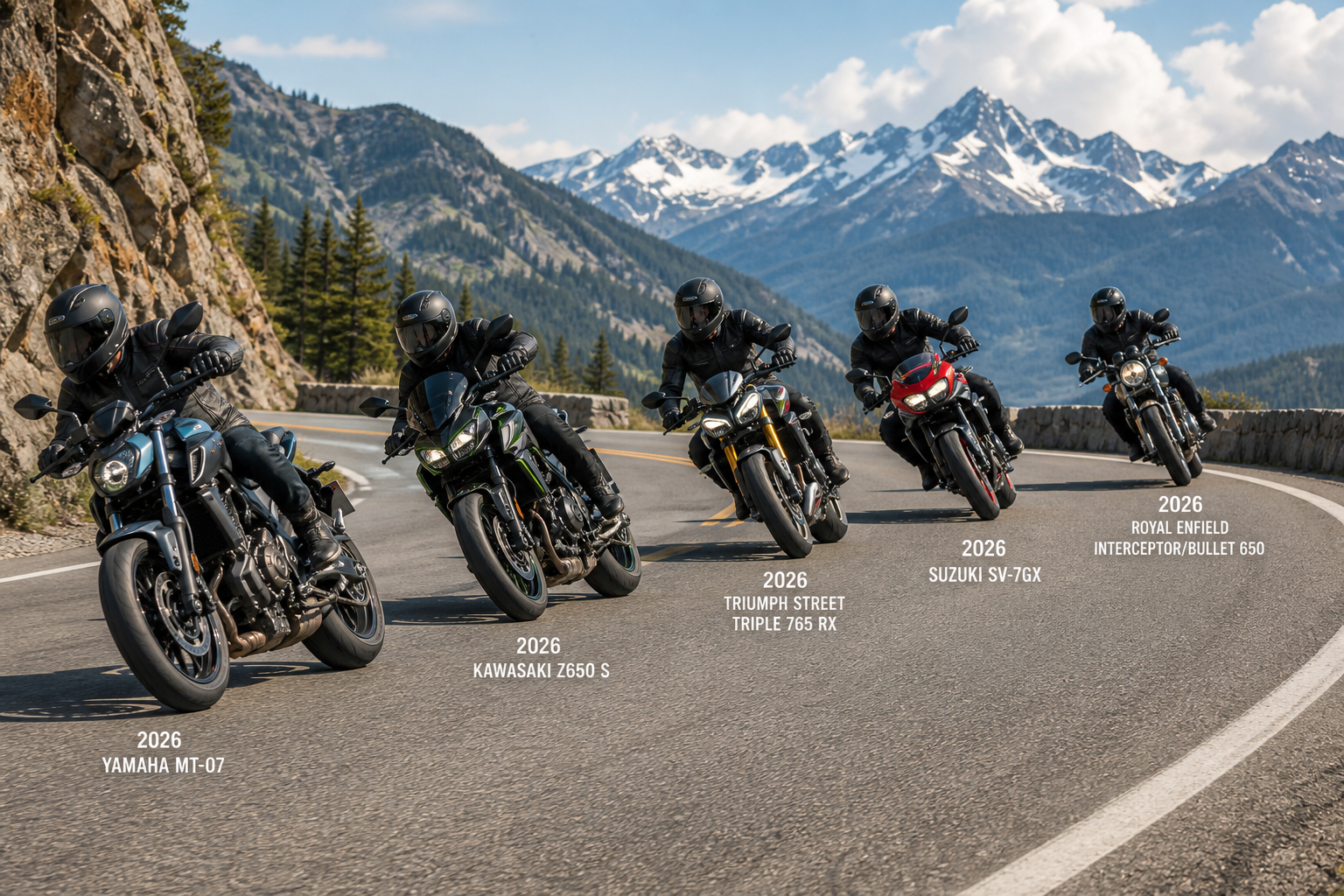
OVERVIEW: WHY MIDDLEWEIGHTS MATTER IN 2026
Middleweight bikes are the busiest corner of the market this year. Sales growth in the 600–900cc range is driven by practical riders who want usable power without the insurance hit or ergonomics compromises of liter-class machines. I spend as much time on canyon backroads as I do at track days, and the bikes that stood out in 2026 share a common thread: real-world usability with serious performance on tap.
MARKET FORCES: PRICING, LICENSING, AND DEMAND
Economic pressure and rising entry costs for big bikes pushed buyers down into well-equipped middleweights. Dealers list highly optioned MT-07s and Z650 S models at competitive prices, and brands are packaging electronics normally reserved for premium classes. The net result: more features for less cash, and more riders able to step into machines that deliver both commuting comfort and weekend performance.
KEY TECH TRENDS
Across the board manufacturers added TFT displays, refined ABS calibrations, and expanded ride-mode lists. Quickshifters are common even on mid-range trim levels. On the chassis side, suspension tuning is more bespoke — think better valving and longer travel forks on some naked/adventure crossovers. These changes change how you set up a bike for street or track work; small adjustments yield big handling gains.
THE MODELS DEFINING 2026
Yamaha MT-07
The MT-07 remains a benchmark for light, nimble middleweights. For 2026 Yamaha pushed electronics and comfort upgrades into the package while keeping the familiar twin-cylinder punch. Dealers show strong stock and competitive pricing on base models, and Yamaha’s model pages list enhanced rider-aid fitment on many trims — making the MT-07 an easy choice for a daily rider who still wants to play on weekend roads.
Kawasaki Z650 S
Kawasaki’s 2026 Z650 S moves the offering forward with a roomier ergonomics package and a full-colour digital TFT instrument cluster — a Kawasaki first in this class. The engine remains a 649cc parallel twin, but emissions-related hardware received a tweak (a second oxygen sensor) to meet stricter regs without upsetting the bike’s character. The update is evolutionary, but it sharpens usability for taller riders and tech-conscious buyers.
Triumph Street Triple 765 (R / RS / RX)
Triumph leaned into the 765 triple’s racing DNA in 2026. The range now includes track-focused RX editions and a Moto2™-inspired special livery. Triumph’s published figures show the R and RS variants tuned up significantly in output — with class-leading peak power figures reported for the higher-spec models — and the RX adds fully adjustable Öhlins NIX forks and ergonomics optimized for the track. If you want a true middleweight road weapon, the Street Triple family is the pick.
Suzuki SV-7GX and the Small-Gap Strategy
Suzuki’s new SV-7GX sits under the liter class and borrows the proven 645cc V-twin architecture from the SV650. It brings ride-by-wire, three ride modes, ABS, traction control, and a bi-directional quickshifter to a price point that undercuts many larger street machines. That strategy — giving riders modern electronics on approachable engines — is shaping a lot of model decisions across brands.
Royal Enfield Interceptor / Bullet 650
Royal Enfield kept things analog in spirit while sharpening performance. The 650 twins still present modest peak numbers compared with sportier middleweights — about the high 40s horsepower and roughly 50+ Nm of torque, depending on model and market — but the appeal is tactile: charismatic twin pulses, simple maintenance, and value. For many buyers, the 650s are now the easiest path to comfortable long-range touring without the complexity and cost of premium European machines.
BMW F900R and Premium Middleweights
BMW focused its mid-class refresh on ergonomics and finishing quality. The F900R received chassis tweaks, a lighter battery and updated ergonomics that make longer rides less fatiguing. On higher-trim middleweights, expect more accessory packages and better-fit finishing as brands chase higher-margin customers without stepping up engine displacement drastically.
RIDE & HANDLING: SETUP ADVICE FROM THE ROAD
These middleweights are nimble out of the box, but suspension and tire choices matter. On a bike like the Street Triple RX, reducing rear rebound a couple clicks and adding progressive fork oil helps the chassis settle mid-corner. On smaller twins — MT-07 or Interceptor 650 — dialing a touch more compression into the forks prevents understeer in fast sweepers. Tires: move up one compound tier if you ride hard weekend roads. The grip/feel tradeoff is worth it.
BRAKES AND ELECTRONICS: WHAT TO EXPECT
Expect stronger braking packages across the class. Radial calipers and twin discs show up more often, and manufacturers tune ABS for minimal intrusion on track-specific trims. Quickshifters and ride modes are common, and some models offer track-specific ABS maps or lean-angle aware systems. Learn how the bike’s systems interact — especially traction control — and practice in progressive steps. You’ll be faster and safer when you understand what the electronics will allow you to do before they intervene.
MAINTENANCE AND OWNERSHIP REALITIES
Maintenance on modern middleweights is friendlier than on liter bikes. Chain, brake pads, and valve checks are the constants. Some brands use service intervals that let you go longer between major inspections, but electronic systems and ride-by-wire hardware add diagnostic complexity. If you value low running cost, compare an OEM’s service schedule and parts pricing — that can sway the total-cost-of-ownership more than initial sticker price.
BUYING ADVICE: WHO SHOULD CHOOSE WHAT
If you want a daily with the ability to scream down canyon roads on demand, choose a nimble twin like the MT-07 or Z650 S. If you want track-capable performance out of the crate, look at the Street Triple RX or RS variants. If touring, comfort and torque over outright peak power matters — the Royal Enfield 650 family and the newly tuned BMW F900R option lines work well. And if you’re budget-conscious but want modern electronics, bikes such as the SV-7GX offer an excellent balance.
PRACTICAL TUNING CHECKLIST (FIRST 500 MILES)
1. Suspension preload: Set for two-up weight or luggage if you plan to tour.
2. Tire pressures: Start with manufacturer cold-pressure specs, then adjust for ride style.
3. Brake bedding: Eight to ten progressive stops on quiet roads to stabilize pad transfer film.
4. Electronics calibration: Learn how each ride mode changes power and traction control levels. Use the gentlest setting while learning the bike.
WHAT TO WATCH NEXT
Expect more refinement, not wildly different engines. Brands are squeezing more value through electronics, incremental chassis upgrades, and smarter ergonomics. The middleweight class will keep growing because it answers the practical problem most riders have: a bike that’s usable every day, entertaining most weekends, and affordable to buy and maintain.
FINAL RIDER NOTE
Pick a bike that matches your daily routine and your weekend ambitions. If you ride two nights a week and a long day each weekend, prioritize comfort, brakes, and midrange torque. If the track calls more often, spend on suspension and tires first. I run setups to match specific roads and can tell you the difference is immediate: better corner entry, less rider fatigue, and more consistent lap times.


0 Comments