

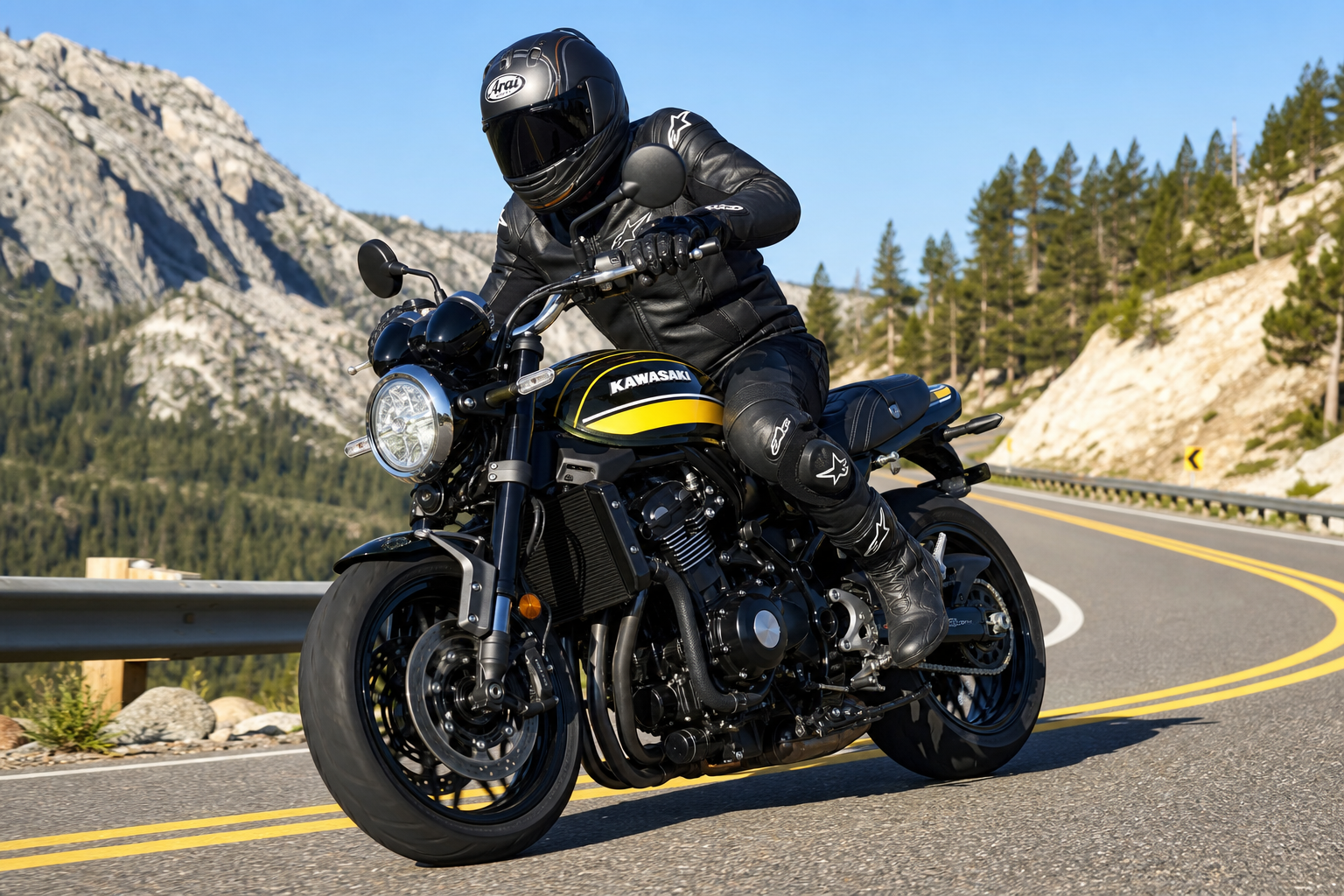
INTRO — WHY THE 2026 Z900RS CHANGES HOW YOU RIDE
The 2026 Kawasaki Z900RS keeps the retro silhouette but rewrites the handling script. Kawasaki sharpened the chassis geometry, introduced ride-by-wire throttle bodies and IMU-enhanced electronics, and fitted higher-spec hardware on SE trims. I’ve spent miles on both twisty A-roads and track-day circuits on this bike; those changes aren’t marketing — they’re tangible, measurable improvements in control.
WHAT KAWASAKI UPDATED FOR 2026
Key mechanical facts you need in your head before setup work: the engine remains a 948cc inline-four with a compression ratio of 11.8:1, fed through Keihin 36mm electronic throttle bodies. Peak output is around 114–115 hp (85 kW) at 9,300 rpm with about 98 Nm (73 lb‑ft) at 7,700 rpm. The wheelbase is 1,465 mm (57.7 in), rake sits at 25° and trail at 98 mm (3.9 in). Claimed curb mass is approximately 215–216 kg (474–476 lb).
FRAME, GEOMETRY AND WHY IT MATTERS
The trellis steel frame keeps the Z900RS feeling planted while still lively through direction changes. Shortening wheelbase a touch and a slightly steeper rake compared to older versions makes the bike quicker to change direction without turning twitchy. In real-world terms that means a responsive front end that still returns confidence under braking.
SUSPENSION & BRAKES — THE HARDWARE THAT DELIVERS FEEL
The standard model gets adjustable 41mm inverted forks; the SE upgrades to gold-colored fully-adjustable forks and an Öhlins S46 rear shock on a horizontal back-link. Brembo M4.32 radial-mount calipers bite twin 300 mm discs up front on SE models, with braided lines and a smaller Nissin radial master for a crisper lever feel.
The result is stopping power you can meter precisely. Those parts make trail-braking less scary because the bite is linear and the modulation remains predictable as you feed suspension travel back into the chassis.
ENGINE DELIVERY AND ELECTRONICS — HOW POWER AFFECTS HANDLING
The 2026 Zee’s ride-by-wire system smooths throttle transitions and ties into Kawasaki’s cornering management function (KCMF) and IMU-based traction control. The engine’s rework — lighter pistons, new cams and a freer revving crank — gives more top-end and cleaner midrange without a snatchy throttle tip-in. That improved tractability lets you be more precise with throttle application exiting corners.
SETUP CHECKLIST — BASELINE FOR UNMATCHED CONTROL
Before you start experimenting, get the basics right. These are the non-negotiables for consistent handling:
- Tire pressures: start with manufacturer recommended cold pressures, then adjust ±0.2 bar (±3 psi) based on feel and load.
- Sag and preload: set rider sag to ~30–35 mm rear and 20–30 mm front as a starting point for street use.
- Damping: on the Z900RS, back off compression slightly from firmer “track” clicks for street—let the fork absorb hits without wallowing.
- Brake lever: set reach so you get full effort without over-gripping; modulate, don’t mash.
- Chain tension: keep within Kawasaki spec; loose chain ruins throttle feel and geometry at load.
PRACTICAL TUNING STEPS — STREET FIRST, THEN TRACK
Street setup is about comfort and predictability; track setup is about pushing limits. Follow these steps in sequence so changes are measurable:
- Confirm stock tire type and condition. If you want sharper turn-in on track, choose a stickier 180/55 rear and modern 120/70 front performance tire.
- Set sag and adjust rear preload for two-up or luggage if needed. For solo aggressive riding reduce preload by a click or two for more compliance.
- Dial damping: increase rear rebound for faster transitions; back off front high-speed compression for a planted feeling under braking.
- For track days shorten the final drive slightly (one tooth on rear sprocket) if you want stronger mid-corner acceleration; be mindful of chain life and top-speed compromise.
RIDING TECHNIQUES TO HARNESS THE Z900RS
The bike gives you better electronics and sharper geometry — you still need the right inputs. These techniques convert hardware into lap time and safer street cornering:
- Neutral upper body: keep shoulders relaxed and let hips steer the bike through a corner. The Z900RS rewards subtle weight shifts.
- Progressive trail braking: apply front brake smoothly as you reduce lean angle; the Brembo setup resists dive and gives feedback you can trust.
- Throttle throttle-throttle: use small, steady roll-on inputs exiting the corner. The ride-by-wire system smooths transitions but will amplify abrupt inputs.
- Look farther ahead: early vision reduces last-second corrections that unsettle the chassis.
STREET VS TRACK: DIFFERENT SETUPS, SAME PRINCIPLES
On the street you want compliance and confidence. That means softer compression and more rebound absorption combined with stable brake feel. On track: stiffen compression, raise preload slightly, and add rebound control for fast direction changes. Always change one setting at a time and log lap times or ride impressions.
COMMON MODS THAT IMPROVE HANDLING (AND THE RISKS)
Riders commonly fit an Akrapovič slip-on, change sprockets, or remap the ECU for crisper throttle response. These deliver performance but can alter weight distribution or throttle behavior. If you remap, retune suspension afterwards — more torque at the rear changes balance under load.
MAINTENANCE CHECKS THAT KEEP THE Z900RS HANDLING RIGHT
Handling isn’t just setup — it’s maintenance. Keep these items on a tight schedule:
- Steering head bearings: check for notch or play; any stiffness kills front-end feel.
- Wheel alignment and axle torque: improper alignment creates vague handling and accelerated tire wear.
- Brake fluid and pads: change fluid every two years or sooner for consistent lever feel; replace pads at first sign of glazing.
- Tire compound and age: a fresh, correctly inflated tire restores confidence far more than exotic suspension parts.
ONE-RIDE CHECKLIST — GET ON THE Z AND RIDE WELL
Before each ride, walk through this quick slate:
- Cold tire pressure check.
- Chain slack and lube.
- Fork and shock visual inspection for leaks.
- Brake lever free-play and light test.
- Steering check for notches with the front lifted slightly.
FINAL IMPRESSIONS FROM REAL-RIDING
The 2026 Z900RS is a rare blend: retro poise with modern chassis intent. Get the setup right and apply the techniques above and the bike becomes more than a pretty classic — it becomes an instrument you can trust on a tight back road or a sunny track session. Small, deliberate adjustments to suspension and disciplined inputs at the bars will unlock the Z900RS’s best behavior.
Ride it with respect. Tune it with method. You’ll find a bike that rewards preparation with confidence and crisp control.


0 Comments