

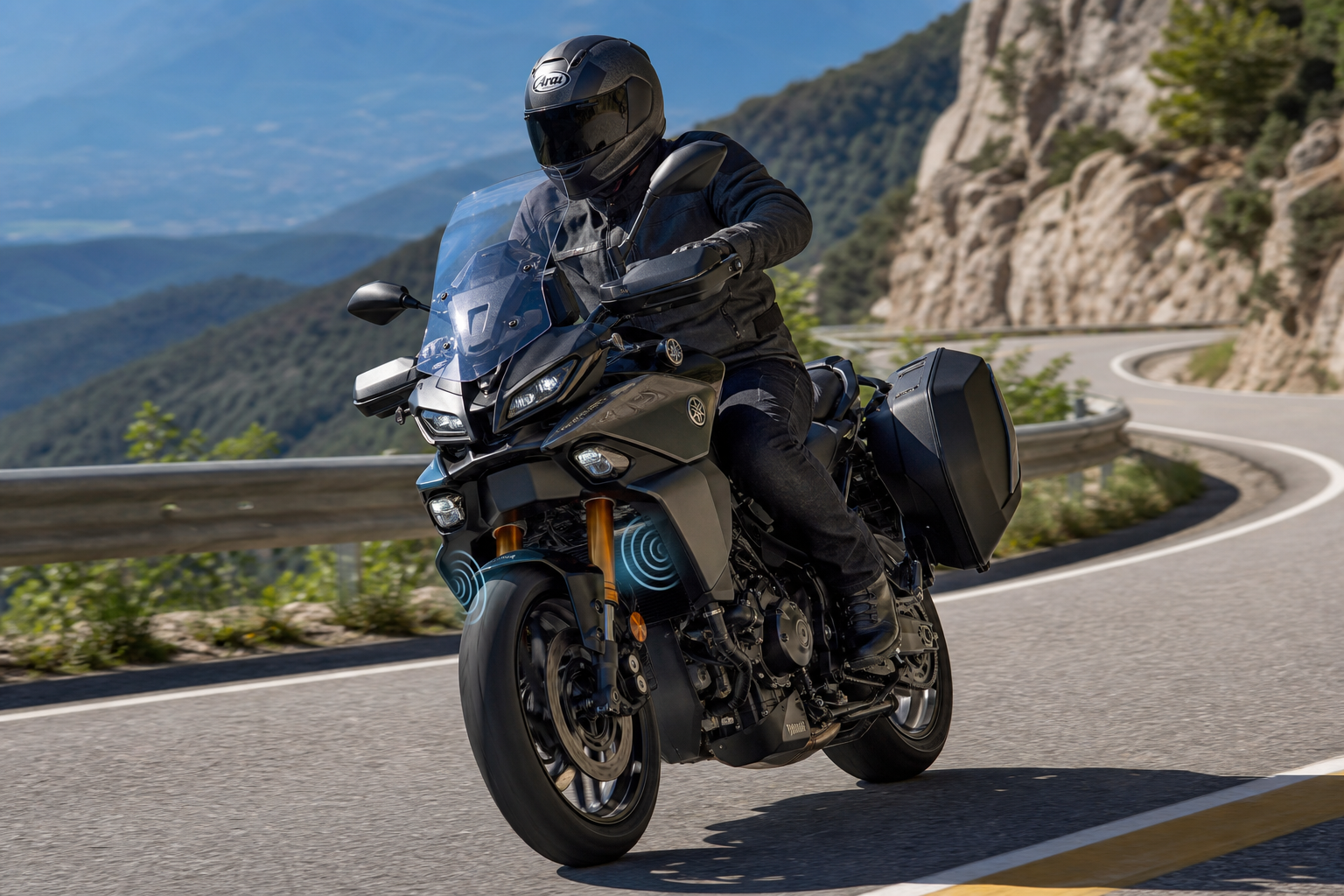
Why ARAS matters in 2026
Advanced Rider Assistance Systems—ARAS—have moved from concept to everyday reality. If you ride a modern multi-cylinder tourer, an adventure bike, or have retrofitted aftermarket radar aids, you already feel the difference: less stress in traffic, more confidence on long hauls, and another layer of protection when things go wrong. This is a practical manual for riders who want to understand what these systems do, how they behave in real conditions, and how to use them without giving up control.
What "ARAS" covers on today’s bikes
Manufacturers and third-party suppliers bundle many functions under the ARAS label. Expect to encounter combinations of the following:
- Adaptive Cruise Control (ACC) — holds speed and gaps to the vehicle ahead automatically.
- Blind Spot Detection (BSD) / Blind Spot Monitoring (BSM) — alerts for vehicles in adjacent lanes you can’t see.
- Forward Collision Warning (FCW) with limited automatic intervention on some bikes.
- Cornering ABS and integrated braking intervention tuned to ARAS inputs.
- Traction and wheelie control that cooperate with sensor suites to modulate torque in emergencies.
- Supplemental features such as lane-departure alerts, front-to-rear radar pairing, and crash-detection telematics.
Recent regulatory and production milestones you should know
Two facts matter when judging how fast ARAS will spread: regulation and production availability. A new UN regulation aimed at driver assistance systems—reported as UN/ECE Regulation No. 171—entered into force on September 22, 2024, creating clearer legal and testing requirements for assistance functions. That regulatory clarity speeds manufacturer development and cross-border acceptance.
On the production side, Ducati led the headlines when the Multistrada V4 added both front and rear radar modules as standard equipment, delivering Adaptive Cruise Control and Blind Spot Detection to a production motorcycle. Ducati’s public materials even list the radar hardware as compact modules roughly 70 x 60 x 28 mm.
Aftermarket suppliers have followed. Systems such as INNOVV’s ThirdEYE and dedicated motorcycle radar products (reported in the trade press and aftermarket reviews) now offer 77 GHz radar modules claiming detection ranges in the order of tens of metres—RevZilla and product pages reference ranges roughly equivalent to 164 feet (about 50 m) for modern blind-spot radar kits—bringing retrofit options to bikes that left the factory before ARAS arrived.
How the sensors actually work — a rider’s quick technical primer
Most motorcycle ARAS implementations combine one or more of the following sensor types: millimeter-wave radar for distance and relative speed, ultrasonic sensors in low-speed systems, and inertial measurement units (IMUs) for lean/attitude data. Radar is robust for relative-speed detection and works well at highway speeds. IMUs provide the lean angle and yaw-rate data that let ABS and traction control adjust behavior during a corner.
Limitations riders must accept
I’ve ridden with every major system in wet conditions and on gravel. Sensors can and do fail to see everything. Radar performance drops when the reflector profile is poor—small bikes, low-lying profiles, or a heavy crosswind can confuse the target signature. Heavy rain, mud, and ice also degrade performance. IMUs are incredibly reliable but only tell the system how the bike is moving, not what’s coming toward it.
Important rule: ARAS is an aid, not an autopilot. It will never have the situational judgement of an experienced rider. Treat alerts as prompts to act, not overrides of your responsibility.
Integration with braking and chassis systems
Modern ARAS ties radar and attitude data into braking and traction systems. For example, a collision alert may prime the ABS and reduce engine torque to shorten stopping distance; cornering ABS uses IMU data so braking force is vector-corrected while leaned over. This integration demands correct calibration—mismatched or uncalibrated sensors can create odd braking feel, especially when combined with aftermarket exhausts or fork changes that alter chassis dynamics.
Practical pre-ride and maintenance checklist for ARAS-equipped bikes
From my track days and street miles, these steps catch more problems before they become incidents:
- Visual sensor check: confirm radars, cameras, and IMU mounts are clean, secure, and free of impact damage.
- Software & firmware: check for OTA updates or dealer-installed firmware updates before long trips—manufacturers push fixes and improved object filtering frequently.
- Calibration: after any fork/swingarm/wheel work, have the system recalibrated per the service manual. Dealers or certified techs should follow the manufacturer procedure.
- Tire and suspension integrity: correct tire pressures and working suspension preserve IMU accuracy and braking performance.
- Aftermarket fitment caution: if you add luggage racks, panniers, or heated grips, verify they don't obscure sensors or change weight distribution beyond manufacturer tolerances.
How to ride with ARAS—real-world technique
Use the systems to reduce workload, not attention. On open roads set ACC to a conservative gap (I keep a longer gap than the system default). In dense city traffic, use BSD as a second pair of eyes—confirm shoulder checks before lane changes. When an ARAS alert triggers, immediately remove throttle, brace the bike, and apply progressive braking yourself; where the system primes the brakes you’ll feel a different initial pedal or lever reaction—stay smooth, avoid grabbing a handful of front brake.
Sensible settings I recommend
Every bike and rider pair is unique, but these baseline settings are a good starting place:
- ACC gap: medium to long for touring, medium for commuting, short only if you have absolute trust and are in steady-flow traffic.
- Alert volume & vibration: set audible alerts to a clear level and enable handlebar or seat vibration if available—audible alerts can be drowned by wind noise at speed.
- Intervention level: if the system allows choosing full intervention or alert-only, prefer alert-only until you’ve ridden with it through varied scenarios.
Buying advice: what to look for in 2026
If you’re choosing a new bike or retrofit kit, check these items before paying:
- Does the system offer both front and rear sensing, or only rear? Full front/rear radar pairing provides the best adaptive cruise and collision handling.
- Is the radar mounting protected and serviceable without removing major fairings?
- Are firmware updates delivered over-the-air, or must you visit a dealer?
- What testing or compliance does the manufacturer cite? Systems developed after the UN/ECE Regulation No. 171 timeline will likely have clearer validation documentation.
- Aftermarket compatibility: confirm the kit specifically lists your make/model and uses proven mounting/grounding strategies to avoid interference with ABS or sensors.
Case studies from the field
Ducati’s Multistrada V4 notably placed front and rear radar modules into production specification, giving riders factory-grade ACC and BSD. Aftermarket players such as INNOVV’s ThirdEYE are shipping 77 GHz modules aimed at blind-spot monitoring and rearward detection; trade coverage lists ranges in the order of 50 metres or roughly 164 feet for the best examples. Garmin and other navigational brands have shown interest in rear-radar camera systems for integrated rider displays, widening the ecosystem beyond OEMs.
Final practical rules for safe use
Keep ARAS patched and calibrated, but keep practicing manual skills. Ride defensively with or without assistance. Treat system alerts as time to verify, not to abdicate. In heavy rain or on loose surfaces, reduce reliance and amplify your visual scanning and body positioning.
Where ARAS goes next
Expect a steady march toward tighter sensor fusion: radar plus camera plus high-precision IMU, and better road-database support for map-based warnings. Regulation (UN/ECE Regulation No. 171) is already pushing testing standards, and both OEM and aftermarket players are responding. The result for riders: smarter aids, fewer surprises, and more choices—if you equip and use them properly.
If you want, I can walk through calibration procedures for a specific model or compare ARAS packages for three popular 2026 motorcycles—tell me which bikes you’re considering and I’ll pull verified spec sheets and dealer procedures.


0 Comments