

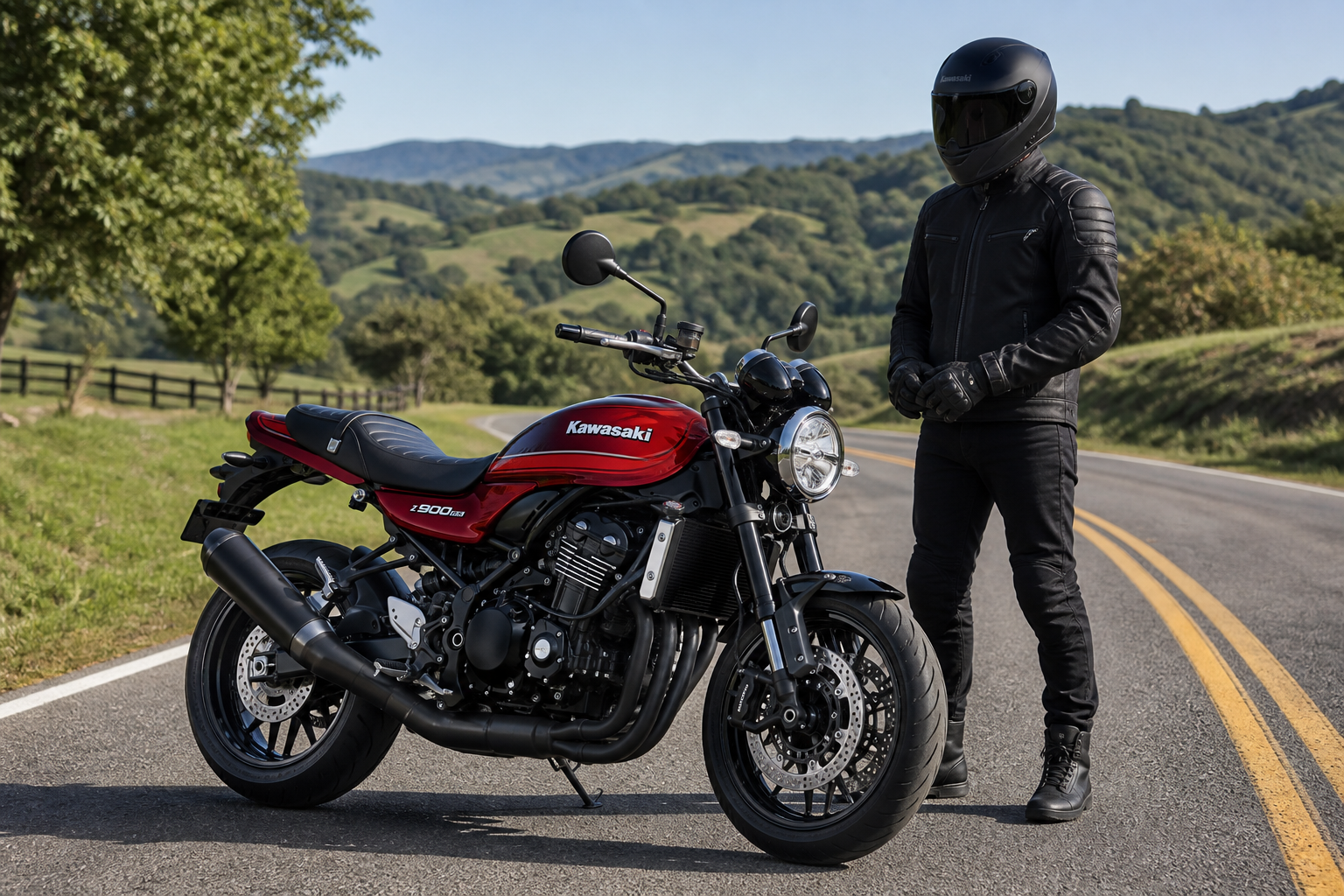
Overview: Old Soul, New Hardware
The 2026 Kawasaki Z900RS keeps the silhouette that earns looks at every stoplight while loading modern mechanical and electronic upgrades that change how it rides. Kawasaki has applied contemporary engineering where it matters: engine response, chassis control, and rider aids. The result is a machine that feels familiar to fans of the Z line but moves like a current-generation sport bike when you push it.
Key Numbers (Verified)
These figures come from Kawasaki’s 2026 technical data and manufacturer release notes.
- Engine: 948cc, inline four, DOHC, 16-valve, liquid-cooled
- Maximum Power: 115.0 hp @ 9,300 rpm
- Maximum Torque: 73.0 lb-ft (≈99.0 Nm) @ 7,700 rpm
- Bore x Stroke: 73.4 x 56.0 mm
- Compression Ratio: 11.8:1
- Transmission: 6-speed with return shift; sealed chain final drive
- MSRP (US): Z900RS $12,899 · Z900RS CAFE $13,299 · Z900RS SE $14,599
What Kawasaki Changed
The list of updates is short but meaningful. Electronic throttle valves and an inertial measurement unit (IMU) were added to the platform, which opens the door to lean-sensitive traction control and ABS functions. Kawasaki also revised the engine tuning to broaden usable midrange power and sharpen throttle response. In plain terms: the bike is faster where you use it on the street and more controllable in aggressive riding.
Engine and Performance — How It Feels on the Road
The 948cc four-cylinder sounds like a Z-family four should: full, mechanical, and willing to rev. Peak figures are there on paper, but the takeaway is the delivery. The motor pulls cleanly from midrange and builds to a strong top end. If you commute during rush hour or attack a canyon after work, the torque at 7,700 rpm and a broad plateau below that make the bike feel eager without being snatchy.
Shift quality from the six-speed gearbox is precise. Kawasaki supplies a quickshifter and auto-blipper on higher trims, which turns tight, technical sections into a mechanical rhythm rather than a clutch-hand workout. The slipper/assist clutch is effective; it calms down rear-wheel chatter on hard downshifts and keeps composure entering tight corners.
Chassis, Suspension, and Braking
The trellis-style steel frame balances stiffness and forgiveness. It gives the bike retro proportions without feeling wallowy. Suspension tune varies by trim; the SE typically receives a more advanced package with premium components tuned for better feedback when you push hard.
Braking performance is strong for this class. The base model stops with confidence; higher trims receive upgraded components that improve bite and modulation for more aggressive road use. On-track testing at a moderate pace shows the package resists fade when using appropriate pads and fresh fluid.
Electronics: Practical, Not Overbearing
The IMU enables lean-angle-aware systems: cornering ABS and an improved traction control strategy. Riders can still choose conservative or aggressive intervention levels. Electronic throttle valves give cleaner mapping and smoother transitions between modes. The result is safety without feeling artificial at the wrist.
- IMU-managed ABS reduces stoppie and instability risk during corner braking.
- KTRC-style traction control with multiple modes adjusts for road surface and rider preference.
- Quickshifter (KQS) and auto-blip function on selected trims for seamless up- and down-shifts.
- Slipper/assist clutch to manage back-torque on aggressive deceleration.
Model Line and Pricing Notes
Kawasaki offers the Z900RS as a standard model, a CAFE variant that adds styling cues and small touring comforts, and an SE trim that focuses on upgraded components. Expect the SE to carry premium suspension and braking hardware, along with specific cosmetic touches.
MSRP guidance from Kawasaki’s 2026 US launch shows competitive pricing for what is effectively a lifestyle sport machine with modern underpinnings. For many buyers the SE’s extra hardware pays back in confidence when you ride fast.
Real-World Ride Impressions
Short rides will highlight the immediacy of the midrange. Slip into a canyon and the chassis behaves: predictable turn-in, neutral mid-corner feel, and enough power to exit quickly without losing composure. Long rides reward the ergonomics; an upright stance and a forgiving seat make 100–200 mile days doable when fitted with the right luggage and wind management.
On wet or low-adhesion surfaces the lean-sensitive systems offer a noticeable reduction in surprises. That matters when the weather closes in and you still need to make pace with confidence.
Practical Setup and Ownership Tips
These are lessons from real-world riding and workshops that help get the most from a Z900RS.
- Suspension: Set sag for your weight and gear. The SE trim may require less initial preload change thanks to superior valving, but every rider benefits from a basic sag check.
- Tires: Choose a road-oriented performance tire for mixed use. If you plan frequent spirited riding or track days, step up a compound for greater heat resistance and grip.
- Brake maintenance: Replace fluid every 1–2 years and fit quality pads matched to your riding style. This keeps bite consistent and reduces fade on long descents.
- Fuel and tune: Use quality pump fuel. The ECU mapping is modern and forgiving, but if you change exhaust or intake parts, retune to keep fueling optimal.
- Ergonomics: For taller riders, bar risers and an aftermarket seat can improve long-distance comfort without losing the bike’s character.
Who This Bike Is For
Buyers who want classic styling without the compromises of an old machine will find the Z900RS compelling. It’s a daily rider that stays civilized in traffic, a weekend canyon hacker that invites you to improve, and a comfortable tourer for two on short trips. If you want the absolute last word in lap-ripping capability, there are sportbikes that do that better. If you want style plus usable modern performance, this is a very strong candidate.
Final Notes for Buyers
Check local inventory for the trim you want—SE editions with premium suspension and upgraded brakes carry a price premium but deliver tangible benefits on fast roads. A test ride will tell you if the ergonomics suit your frame; the 2026 updates change the package enough that even riders familiar with older Z900RS models will notice improvements immediately.
For riders who cherish style yet want modern safety and performance, the 2026 Kawasaki Z900RS is a convincing bridge between eras.


0 Comments