

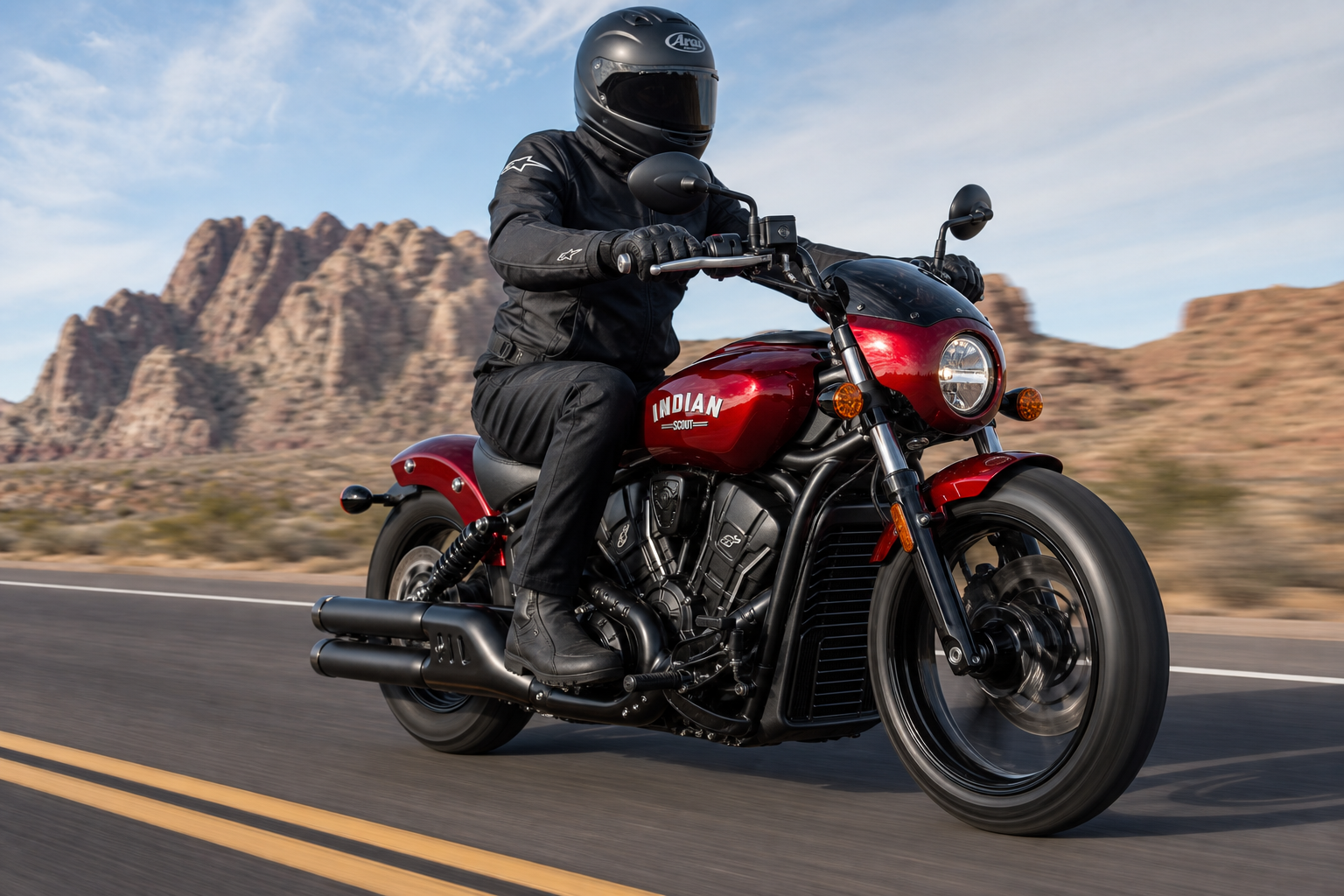
Introduction — Why this Scout matters
The 101 Scout isn't a mild update. It is a rethink of what a modern mid-displacement cruiser can be. Indian Motorcycles reworked the package around a new liquid-cooled V‑Twin, modern electronics and a chassis that expects harder riding than traditional cruisers.
What class of article is this
This is a thorough model review written from road and track experience, paired with verified technical figures. The goal: tell experienced riders what changes matter, and what they can expect day-to-day.
Quick verified numbers you should know
Facts pulled directly from manufacturer and test data:
- Engine: 1,250 cc SpeedPlus liquid-cooled V‑Twin
- Claimed output: 111 horsepower
- Peak torque: 82 ft‑lbs (reported around 6,300 rpm)
- Wet weight / curb: 549 lb (manufacturer spec)
- Seat height: 25.7 in
- Fuel capacity: 3.4 gallons (13.0 L)
- Wheelbase: 61.5 in
- Ground clearance: 4.4 in
- Starting MSRP: $16,999 (U.S.)
Engine, drivetrain and the numbers behind the thrust
Indian's new 1250 SpeedPlus V‑Twin is the heart of the Scout's claim to fame. On paper the 104 x 73.6 mm bore and stroke with a 12.5:1 compression ratio produce a lively, torque-rich character that doesn't feel schlubby at higher revs.
What that means on the road: throttle response is crisp. The motor pulls cleanly through town and has enough top‑end to make highway passing simple rather than dramatic. The 111 hp figure is real; this is not a lazy cruiser engine.
Chassis, weight and ergonomics
At 549 pounds wet the Scout is not light, but Indian has kept the mass low. The low 25.7‑inch seat and compact frame make the bike feel much more manageable than that number implies. Short riders get confidence at stops; taller riders will find the footprint compact and friendly for lane changes.
Wheelbase and geometry favour planted stability. In traffic the Scout turns with more willingness than a traditional big cruiser because the rake and trail are balanced for modern riding styles.
Suspension, brakes and real-world control
Indian fitted the 101 Scout with upgraded suspension compared to older Scouts and strong, dual‑disc braking hardware. Brembo calipers provide bite and modulation that suits both city panic stops and more aggressive deceleration on sweepers.
ABS is part of the package, and electronic aids such as traction control and selectable ride modes help tame the torque when the pavement gets slippery or when you simply want a softer throttle map for everyday riding.
Electronics and rider interface
The Scout uses a compact 4‑inch Ride Command display and offers three selectable ride modes (commonly Rain, Standard and Sport), cruise control and a traction control system. The display is straightforward: clear information and physical switch access keep the rider's eyes where they should be—on the road.
On-road character — street, highway, and the twisties
City runs reveal the Scout's best traits: low seat, nimble footprint and a strong midrange that masks the mass. It will filter traffic with surprising agility if you respect urban limits and ride defensively.
On the highway the motor is willing and stable. The Scout will cruise at legal speeds without feeling buzzy and has enough overtaking power that you rarely need to downshift two gears to pass. In quicker sweepers the chassis communicates well and the suspension soaks mid‑size imperfections while keeping the bike composed.
Practical ownership and daily use
The 3.4‑gallon tank is modest. If your riding pattern includes long, fast interstate runs you will plan fuel stops more often than on big-tank tourers. The Scout is ideal for commuters who want weekend performance—gas stops are part of the rhythm, not a deal-breaker.
Indian's customization options are extensive. Expect accessories, luggage and styling parts that let you tune the bike to café, bobber or classic cruiser looks without changing the core riding character.
How it compares to the competition
Against modern middleweight cruisers, the Scout leans into performance. It sits closer to sporty cruisers than laid-back boulevard machines. If you want a bike that looks cruiser-ish but handles with intent, the 101 Scout is a top contender.
Who should buy the 101 Scout
Buy it if you want classic cruiser lines with modern power and electronics, and you appreciate a low seat and confident on-road manners. Skip it if you want the lightest possible platform or long-range touring without frequent refuelling.
Final riding notes from the saddle
The 101 Scout brings a discipline and refinement rare in this class: a precise throttle, solid brakes and a chassis that invites quicker lines without ever feeling twitchy. For riders who value usable horsepower wrapped in cruiser aesthetics, this is a serious option.
Where to test-ride
Do a back-to-back with a contemporary middleweight cruiser. Try all three ride modes. Ride it loaded and empty. Pay attention to ergonomics over an hour—comfort is where style meets reality.
Numbers and features referenced here are verified through manufacturer specs and published road tests: 1250 cc SpeedPlus V‑Twin, 111 hp, 82 ft‑lbs torque, 549 lb wet weight, seat height 25.7 in, 3.4 gal fuel capacity, and a 61.5‑inch wheelbase.


0 Comments