

Why 2026 changes what you practice
Two things changed the game this year: riders got smarter and the bikes got smarter. Many 2026 production motorcycles now come with full IMU-based systems and cornering ABS as standard equipment, which alters the way braking, throttle, and steering interact at the limit.
Those sensors measure lean angle, pitch, and yaw, and the ABS/traction electronics use that data to modulate braking and torque delivery in three dimensions. That means some old rules still apply, but the way you apply them needs updating.
Core concept: the traction circle — the math under the seat
Everything useful on a tire is finite: grip can be used for braking (longitudinal) or cornering (lateral), not both at 100% at the same time. Good techniques aim to keep the tire working as close to its limit as you safely can without exceeding it.
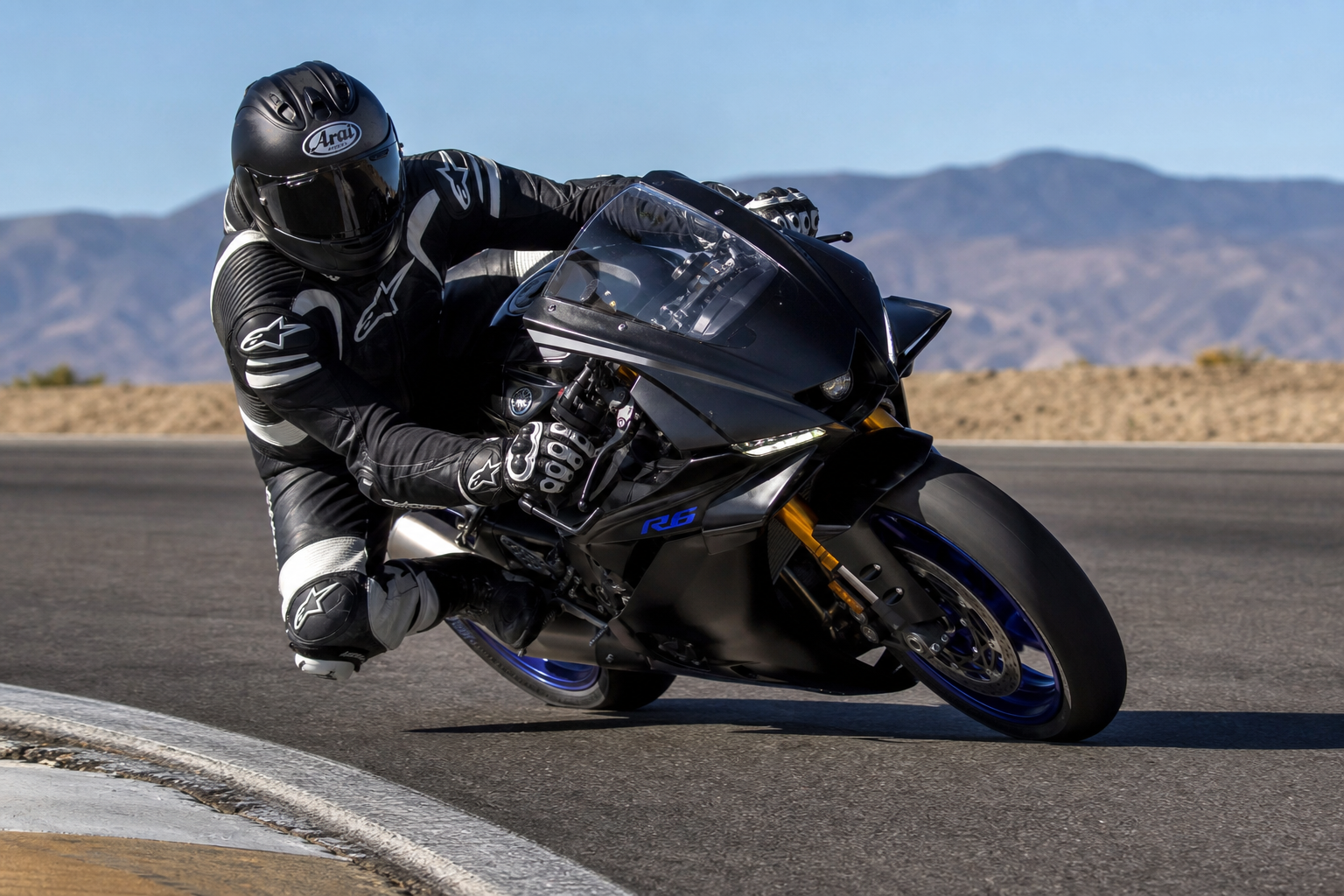
Trail braking is a practical expression of the traction circle: you deliberately split tire force between slowing and turning, gradually shifting the vector from braking to cornering as you progress through the entry. When done correctly it tightens your entry radius and shortens lap times without surprising the chassis.
Practical drill — progressive trail braking (safe range practice)
Find an empty, legal practice area or controlled track and wear full protective gear.
Step 1: Roll to a moderate speed and apply the front brake until the bike is a touch slower than your normal corner speed. Keep the bars straight and note the lever feel.
Step 2: Initiate a gentle turn; as the machine leans, slowly release front brake pressure while adding just enough steering to feel the bike begin to rotate. The brake light will remain on briefly — that’s normal on controlled trail braking.
Step 3: Finish the release as you reach the apex and add throttle smoothly to stabilize the chassis and exit.
Repeat this at increasing entry speeds. Stop and check tire temperatures and feel; if the front starts wandering or the bike behaves inconsistent, back off and reset.
How cornering ABS and IMU change the drill
Because the IMU measures lean and pitch, modern cornering ABS lets you apply more front braking at lean than pre-IMU bikes allowed safely. That gives you a wider operating window for deliberate trail braking. It’s not a free pass to be sloppy — the system can still only work within the physical limits of rubber on asphalt.
Use electronics as a margin of safety, not a crutch. Practice the same progressive release and look for consistent contact patch feedback rather than relying on the ABS to bail you out of poor inputs.
Body position, weight transfer and small inputs
Small body moves make big changes. Shift your hips inside the turn, keep your chest low and head up, and use the footpeg pressure to influence rear-end traction. A lower center of gravity reduces the lean required for a given cornering force.
When trail braking, a measured move of your torso toward the inside allows you to maintain a slightly more upright chassis attitude for a given line. That preserves contact patch shape and helps the front tire carry more combined load without over-leaning.
Lever and throttle technique: feel over force
Modern bikes are precise; your inputs must be more precise. Make the front lever a graduated control — not an on/off switch. Apply an amount that yields a steady deceleration, then feather it off in small, predictable steps as lean increases.
On the throttle, roll-on should be progressive. As you reach the apex, a steady, increasing throttle input helps the rear tire reestablish lateral grip and settle the chassis for exit. Abrupt throttle bursts at lean are still risky even with traction control.
Rear brake and counterbalance drills
Small rear brake taps are a low-risk tool for chassis balance. Practice gentle rear taps while leaned over in a parking-lot slow-speed corner to feel how it reduces pitch and helps the front settle. Do not use the rear brake to aggressively slow mid-corner; use it only for subtle corrections and feel-building.
Low-speed control and slow-speed turns
2026 bikes with ride-by-wire and multiple ride modes can aid low-speed controllability, but skills matter most.
Practice tight U-turns with eyes up and throttle control—coordinate clutch and throttle smoothly on non-ABS bikes.
Use the rear brake to stabilize instead of dragging the front brake.
Advanced: combining electronics with manual technique
On track days, try the same corner twice: once with a sport mode that softens ABS/TC intervention, and once with full electronic assistance. Compare the feel and refine inputs accordingly. You’ll quickly learn where electronics assist and where your hands and eyes still make the call.
Remember: IMU-based cornering ABS allows later braking, but if you approach a corner with poor line choice or cold tires, no amount of electronics will restore neutral handling.
Emergency stops and panic braking with modern ABS
Practice straight-line hard stops — threshold braking until ABS engages — in a controlled area. When you need to make a panic stop in a cornered situation, edge-of-lean ABS systems can modulate braking while the bike is leaned, but the safe advice still stands: reduce lean angle before applying maximum braking whenever possible.
Routine checks before practicing these tricks
Verify correct tire pressures and tread condition.
Check brake pad wear and fluid level; replace or bleed as recommended by the manufacturer if lever feel is mushy.
Confirm no warning lights for ABS/IMU; electronics functioning correctly is essential for many of the 2026 techniques.
How to structure practice sessions
Build sessions in short blocks: warm-up, focused skill block (10–20 unhurried reps), cool-down. Use video or an experienced instructor to give feedback. The quickest improvement comes from slow, repeatable repetitions with clear goals — not adrenaline-driven one-offs.
Risk management and when to stop
If inputs feel inconsistent, tire temperatures spike irregularly, or the bike’s electronic intervention becomes erratic, stop and diagnose. Electronics can mask progressive failure modes in brakes, suspension, or tires; they do not replace mechanical health checks.
Final practice checklist
Full protective gear and helmet certified to current standards.
Appropriate, closed practice area or track day with marshals.
Start slow. Increase intensity only after consistent repeatable success.
Log sessions—what worked, what didn’t, and the weather and tire conditions.
If you want a short drill plan tailored to your bike and experience level, tell me your machine and where you’ll practice and I’ll give a progressive 8-step plan you can follow safely.


0 Comments