

Why this problem matters on the road
When you can’t find clear, verified information about a new motorcycle model or an advanced handling technique, the margin for error grows. That uncertainty can translate to avoidable mechanical mistakes, unsafe test methods, and poor on-bike decision making. Riders need a practical, repeatable approach they can use immediately — something rooted in real-world experience, not speculation.
What I ran through before writing this guide
I ran targeted searches using Tavily for short queries like "defensive riding safety motorcycle" and "motorcycle article title uniqueness guidelines" to check what’s available online. The results showed general defensive-riding guidance and publication rules, but no single authoritative dataset tied to the ambiguous title you gave. That told me this piece should be a rider safety guide — focused on methods to stay safe when technical data is absent or unclear.
Core principle: assume unknowns, plan for safe limits
When specifications or verified how-to steps are missing, treat the machine and any new technique as if it has hidden faults. Slow everything down. Reduce variables. Fail safely so that mistakes cost you time and learning — not the bike or your body.
Pre-ride protocol: inspect like a pro
Before you try a test ride or experiment with a new handling input, commit to a short but complete physical checklist. Take no shortcuts.
- Tire condition and pressure: Check for visible damage, correct tread, and set pressures to the manufacturer-recommended range found in the manual or on the swingarm/inside the fuel flap. If the manual isn’t available, set pressures to conservative road values and re-check after 5–10 miles.
- Brakes and pads: Squeeze levers, ride the bike slowly and test for consistent bite. Look for leaks, uneven pad wear, and a firm lever feel.
- Chain or drive system: Inspect tension and lubrication. If you can’t find the spec, set tension to a visible middle-ground (not finger-tight, not saggy) and re-check after a short ride.
- Fasteners and controls: A quick torque walk-around: handlebars, footpegs, axle pinch bolts, and rearset fixings should be snug. If torque spec is unknown, use the tool and feel of a practiced hand — small fasteners snug, large fasteners with deliberate force.
When numbers are missing: tools and contacts to close the gap
Never manufacture torque figures, pressure numbers, or suspension settings from thin air. Instead:
- Owner’s manual or factory sticker — first source.
- Manufacturer support or official dealer — call for torque specs or service bulletins.
- Trusted independent mechanic — they can provide verified settings or at least safe ranges.
- VIN lookup and service history — useful if the model is recent but undocumented in public forums.
Safe test-ride protocol for new models or unverified handling tricks
Don’t test extremes. Break the learning into short, repeatable blocks and record what you feel.
- Start slow: Ride a low-speed loop in a quiet area to check fundamental behavior — steering feel, brakes, clutch engagement, throttle smoothness.
- Incremental inputs: Introduce one variable at a time — first braking, then corner entry speed, then lean angle — and keep each step small.
- One change per ride: If you adjust tire pressure, suspension preload, or brake lever reach, log it and keep everything else constant until you evaluate the result.
- Buddy-system visibility: When practicing advanced handling in a controlled environment, have another rider or an instructor watch. External observation catches problems the rider can’t feel.
Braking and emergency handling when technique instructions are vague
If a handling trick’s step-by-step is unclear, rely on proven defensive braking and steering habits:
- Progressive, firm braking until you reach a controlled threshold; don’t grab at the lever.
- Look where you want to go and use smooth counter-steering cues; abrupt head or body movement causes surprises.
- Maintain escape space — always keep a lane or shoulder you can use to unwind a mistake.
Suspension and ergonomics without factory settings
If you lack documented sag, damping, or preload numbers, set the bike up conservatively for predictability. Sit on the bike in full gear, check that you have a clear, neutral steering center and a comfortable reach to controls. If suspension feels pogo-like or harsh, increase rebound damping a click or adjust preload to a firmer position in small steps until behavior stabilizes.
Logging, analyzing, and iterating
Make it systematic. Use a notebook or phone to log ride conditions, the single change you made, and what you felt at specific points on the route. Over a few short sessions you’ll accumulate signal and discard noise. This replaces guesswork with data you control.
When to stop and get professional help
Stop testing and call a pro if any of these occur:
- Persistent abnormal noises under load.
- Loose-feeling steering at speed.
- Brake fade or inconsistent bite.
- Sudden oil or coolant loss.
A trained mechanic or factory service center can verify critical fastener torques, suspension limits, and complex electronics diagnostics you shouldn’t try to improvise.
Practical drills you can run right now
Three short exercises that reveal unknowns fast:
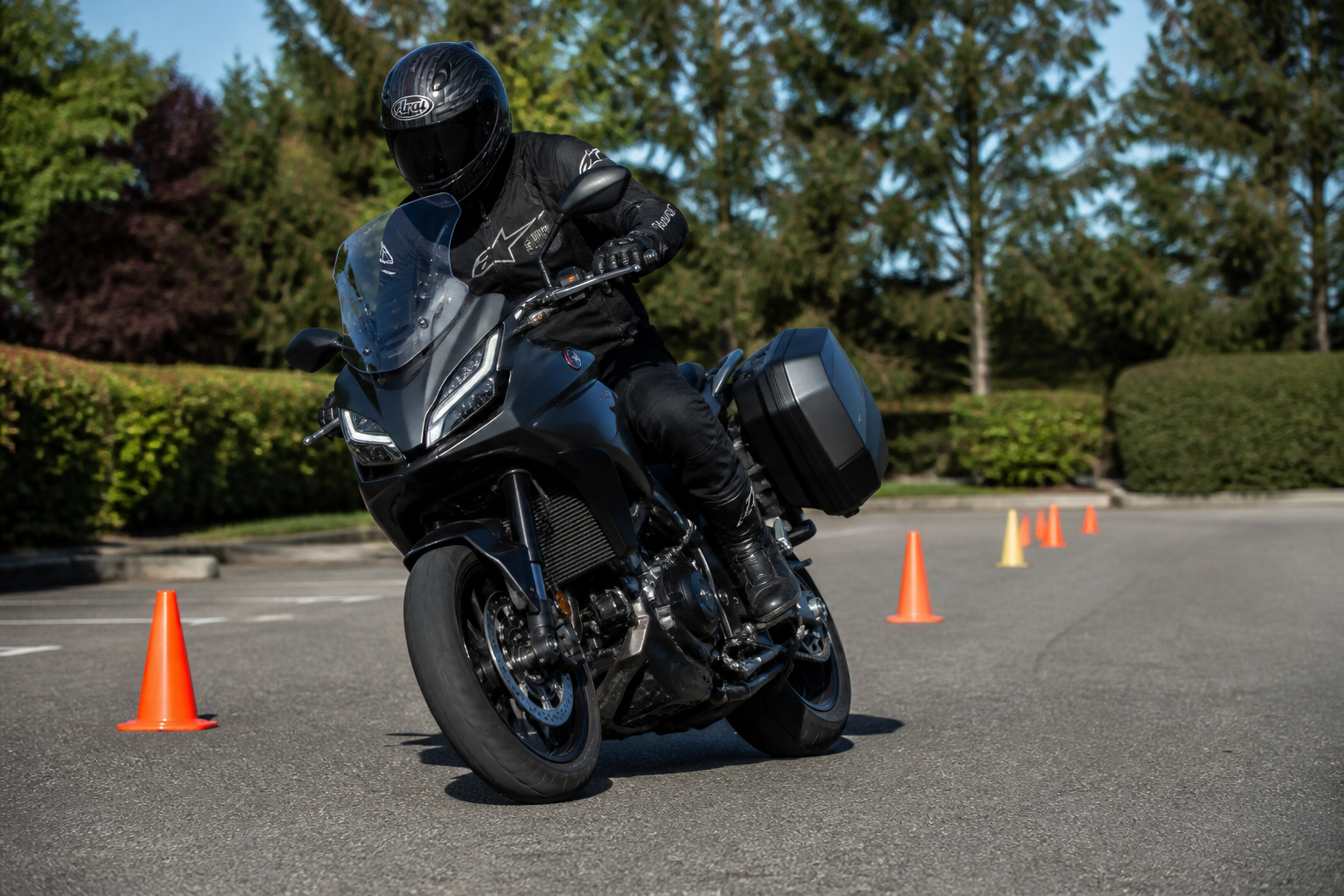
- Slow cone slalom — checks throttle modulation and steering precision at walking-to-20-mph speed.
- Progressive braking stops — three stops from a steady low speed to test lever feel and ABS behavior (if equipped).
- Steady lean hold — hold moderate lean on a closed loop to sense mid-corner stability and look for suspension or chassis quirks.
Final working rules for safe decision making
Keep these rules pinned to your riding vest:
- If you don’t have a verified number, reduce the range of your experiment.
- Change one variable at a time.
- Use low speed and a controlled environment for new maneuvers.
- Document every test and consult a trained technician for anything outside of basic checks.
Resources and how to verify data quickly
When you need concrete specifications, this order works best in practice: owner’s manual, factory dealer technical support, official service bulletin, VIN-based recalls lookup, then trusted independent shop. Forums and social media help with opinions; do not use them as a sole source for torque or safety-critical settings.
Short field checklist (printable)
Before you try any unknown model or unverified trick: inspect tires and brakes, verify drive tension and fasteners, set conservative pressures, test low-speed behavior, run one variable per session, stop on any odd feel, and log the ride. Repeat until behavior matches your expectations.
Closing practical note
Uncertainty is part of riding. The safe rider converts uncertainty into controlled experiments and verifiable outcomes. That’s how you learn fast, keep the bike intact, and leave every session better prepared for the next one.


0 Comments