

The next 18 months will separate earnest electric designs from the experiments. Riders, fleets and city planners are already moving the rules. This article lays out the hard numbers, the technology that matters, and the choices a commuter or fleet manager should make for 2026.
MARKET MOMENT: WHAT THE NUMBERS SAY
Global sales and investment in two‑wheel electrics are not a niche story any longer. Industry trackers show the combined electric scooter and motorcycle market valued in the tens of billions in 2024 and projected to multiply strongly through the early 2030s. A broad view of recent research places 2024–2025 market valuations anywhere from the low tens of billions to more aggressive projections in the hundreds of billions when scooters are included — driven by Asia Pacific volumes and fleet electrification.
India alone recorded roughly 1.14 million electric two‑wheelers in 2024, a clear signal that mass adoption is well underway in dense urban markets. China still leads in absolute volumes, with multi‑million unit sales of electric two‑wheelers reported in 2024. On the premium end, the niche performance electric motorcycles remain a small but visible slice — companies like Zero and LiveWire report growing, if modest, unit sales in higher‑price brackets.
WHY 2026 IS DIFFERENT FOR URBAN RIDERS
Three forces converge in cities: vehicle availability, charging or swapping convenience, and policy support. Battery costs continued to fall into 2024–2025, pushing many commuter models below the total cost of ownership of small ICE bikes. That flips the purchase calculus for value buyers and for delivery fleets with tight operating margins.
At the same time, fast expansion of battery swap networks and public Level 2 charging has reduced range anxiety for short urban trips. Companies like Gogoro have scaled swap infrastructure aggressively, reporting thousands of swap stations and millions of subscribers across their ecosystems — a model that has proven its value in dense metropolitan grids.
KEY TECHNOLOGY SHIFTS TO WATCH
Not all electric motorcycles are built the same. Expect the following technologies to define winners in 2026.
- Battery chemistry and pack architecture: Lithium‑ion remains dominant, but higher energy density cells and alternative chemistries aimed at lowering cost are moving into production. Manufacturers now routinely offer modular battery options for different range profiles.
- Battery swapping versus fixed charging: Swapping networks scale faster in high‑density markets for short‑range commutes and fleets. Swapping delivers near‑instant "refuel" times. Public and workplace charging still matter for private owners and longer range models.
- Electric drivetrains tuned for city duty: Torque‑rich motors with software torque maps for stop‑start traffic give rapid acceleration and efficient energy use. Premium models retain large battery capacity for mixed urban/highway use.
- Over‑the‑air updates and telematics: OTA updates, ride logging, and predictive maintenance telematics are now common even on mid‑range models. Fleets will demand this capability as standard in 2026.
FEATURES THAT MATTER FOR URBAN RIDERS
When you test ride or spec a bike for city commuting, focus on these parameters. Short trips magnify the impact of each design choice.
- Real usable range: Manufacturer range figures vary with testing standards. Check expected city range at normal riding speeds, not ideal test cycles.
- Charging time and connector types: Level 2 charging for overnight use, plus availability of DC fast or swap options for quick turnarounds.
- Low‑speed torque and controllability: Smooth throttle mapping reduces wheelspin on wet cobbles and in traffic.
- Service access and software ecosystem: OTA capability and dealer support cut downtime for fleet operators and private owners.
BATTERY SWAPPING: THE URBAN GAME CHANGER
Battery swapping has moved from pilot to industrial scale in some markets. The benefit is stark: quick battery exchange, consistent energy availability, and a subscription model that shifts battery responsibility away from the rider.
Operators have reported that swap networks reduce infrastructure friction for riders who can’t install home chargers, while also giving operators centralized battery management for safety and lifecycle optimization.
URBAN USE CASES: COMMUTERS, FLEETS, DELIVERY
For couriers and food delivery fleets, the economics are obvious. Lower fuel cost, simpler powertrains and lower preventive maintenance create meaningful operating savings. The numbers in large Asian cities already favor electric fleets for last‑mile jobs.
Private commuters choose between compact swappable scooters that prioritize convenience and higher‑capacity commuter motorcycles that offer broader range for mixed routes. Performance models serve a different buyer: those willing to pay for higher speed and torque, along with refined chassis and braking hardware.
REAL SPEC EXAMPLES RIDERS SHOULD KNOW
Premium electric motorcycles now quote figures that rival small ICE sportbikes. For context:
- Zero SR/F family machines advertise high torque and power figures with battery options around the mid‑teens kWh and advanced stability/control systems — they aim to be full‑sized road bikes with electric delivery.
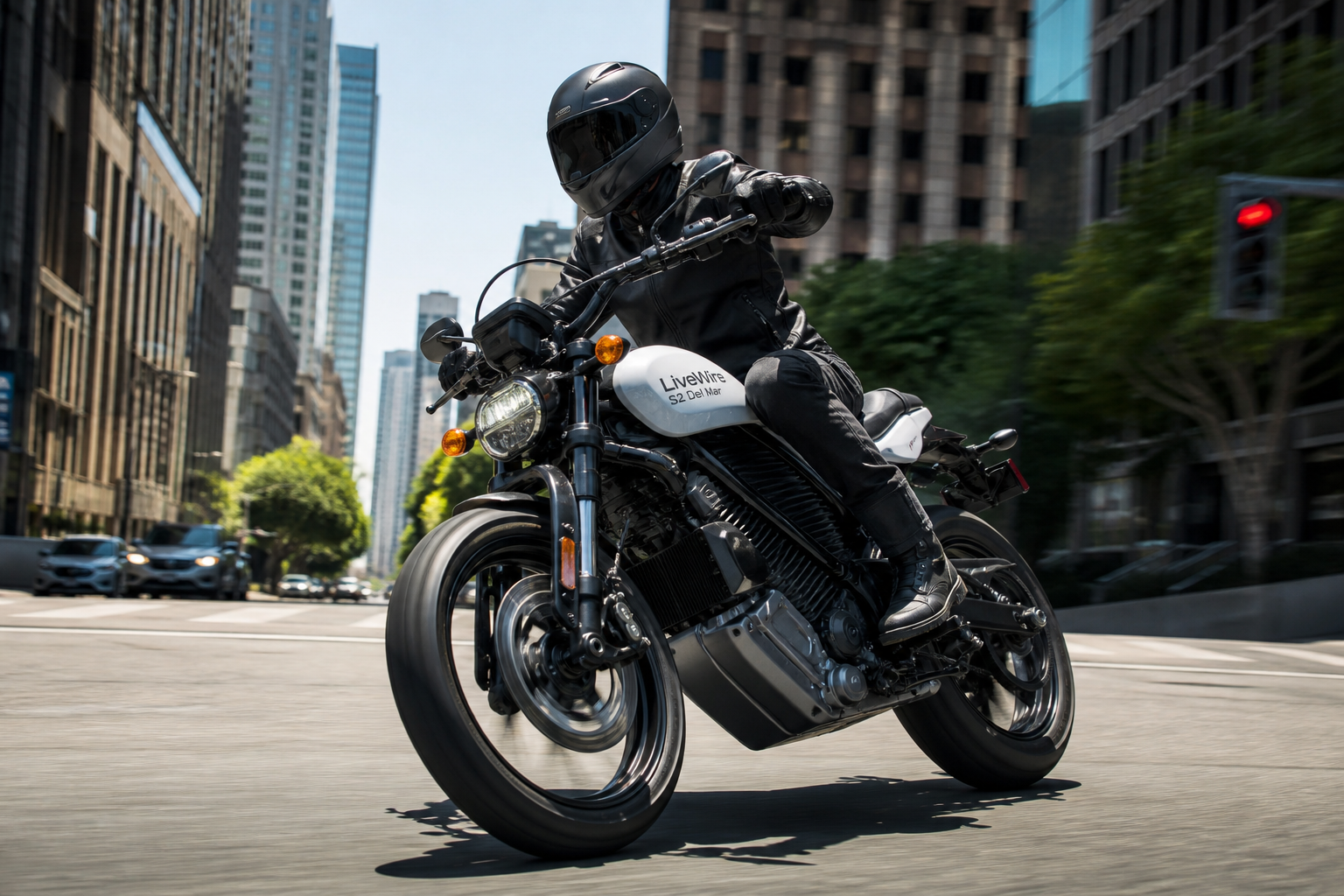
- LiveWire models in recent years have claimed roughly 100 horsepower in upper trims with city range figures aimed at commuter use; startups and legacy brands continue to refine range and charge capability aggressively.
These specs matter, but the ride quality, software, and dealer network are equally important for day‑to‑day ownership.
MAINTENANCE, SAFETY AND RIDER TIPS FOR 2026
Electric motorcycles change the maintenance checklist. There is less frequent oil and filter work, but other items demand attention.
- Battery health monitoring: Learn how your bike reports State of Health and follow recommended charging practices to maximize pack life.
- Brake system care: Regenerative braking reduces pad wear, but check caliper seals and rotors regularly — urban stop‑start cycles stress brakes differently than highway riding.
- Software updates: Accept OTA updates and review changelogs. Updates can improve range, add safety features, or change throttle mapping.
- Tire selection: Choose tires rated for the higher instantaneous torque of electric motors and for wet grip in urban conditions.
BUYER’S CHECKLIST FOR URBAN ELECTRICS
When you narrow choices, inspect these items in person.
- Actual city range on a test route similar to yours.
- Charging or swapping options near home and work.
- Availability of dealer service and spare parts within your city.
- Telematics and warranty terms for battery degradation.
- Comfort and ergonomics for stop‑start riding.
POLICY, INFRASTRUCTURE AND THE 2026 OUTLOOK
Government incentives will continue to shape adoption curves. Programs in India aimed at accelerating electric two‑wheeler uptake and expanding charging networks provide a clear example of policy influence on local markets. In parallel, private investment in swap networks and public charging in Southeast Asia and Latin America is expanding steadily.
Expect OEMs to expand product lines targeted at specific urban niches: ultra‑low cost swappable scooters for gig workers, mid‑range commuter motorcycles with moderate battery capacity for mixed urban/suburban riders, and premium electric roadsters for performance buyers.
TWO THINGS TO DO IF YOU’RE BUYING FOR 2026
First, plan for how you will charge. If you can install a home Level 2 charger, prioritize battery capacity and comfort. If you cannot, pick a model that supports local swapping or has fast, convenient public charging.
Second, treat software as part of the product. Ask about update cadence and whether critical features are improved by OTA. This is a real part of ownership now.
FINAL RADAR: WHAT PROFESSIONAL RIDERS AND FLEETS ARE WATCHING
Riders who test and teach on these bikes report that the instant torque changes riding technique in traffic — smooth throttle work and measured trail braking become more important in low‑speed urban maneuvers. Fleet managers want durable batteries, consistent swap access and telematics that cut downtime.
Expect 2026 to be a year of consolidation and maturation. Models and infrastructure that deliver reliable daily service will win. Shiny spec sheets without local support will not.
If you want, I can follow up with a region‑specific buyer guide — India, Southeast Asia, Europe or North America — and pull the most current spec tables for candidate models in each price band.


0 Comments