

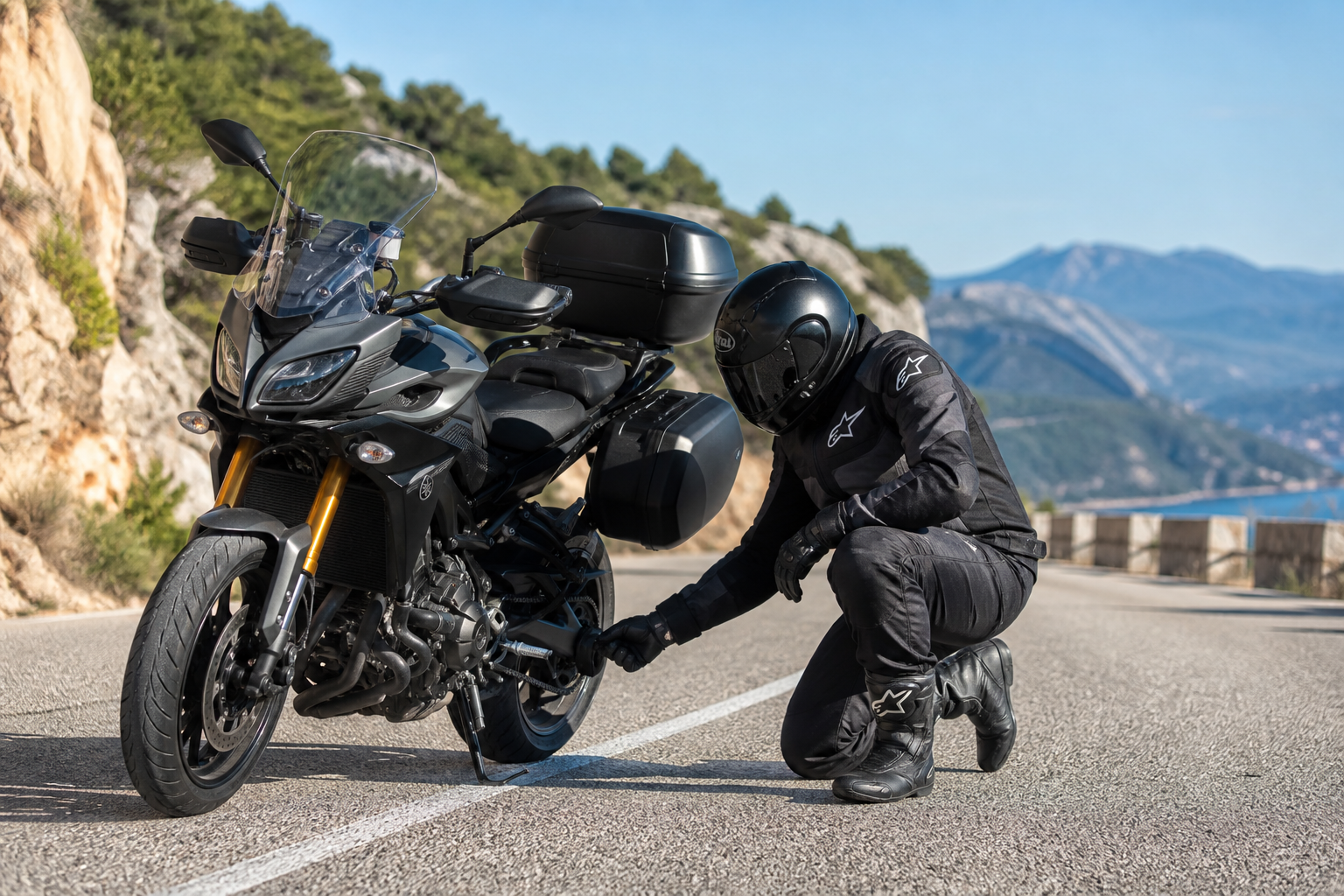
Why this title becomes a Rider Safety Guide
That phrase reads like a stop sign in a workflow. For riders, the only acceptable response is preparation. Based on the wording and the practical needs it implies, this post is a focused rider safety guide — a step-by-step, street-tested manual for handling on-road stoppages, avoiding escalation, and getting back on the move safely.
What to carry: the compact, crash-tested roadside kit
Long trips fail more often for lack of a few small items than for major mechanical faults. I keep a compact roll of tools and consumables under the seat. It has saved rides more than once.
- Tire plug kit and a small CO2 inflator or mini electric pump.
- Multi-tool with pliers, blade, and screwdriver heads.
- A small set of metric sockets/wrenches targeting common bolt sizes on your bike.
- Zip ties, duct tape, and a short length of paracord—they jury-rig more than you think.
- Spare fuses and a compact fuse puller.
- Compact first-aid kit and nitrile gloves.
- High-visibility vest or reflective strap and a powerful torch/headlamp.
- Charged power bank and a short USB-C/Lightning cable.
- Emergency contact card, copy of registration and insurance, and small cash.
Why these items, in this order
Tires cause 80–90% of roadside stoppages for single riders. A plug kit plus inflation device often gets you to a safe repair point. Tools and fasteners let you secure loose plastics or a shifted luggage rack so the bike can be ridden home instead of towed.
Immediate actions at the first sign of trouble
Act fast, and slow down the decision-making. You want to remove risk, not create new hazards.
- Do not panic. Reduce speed smoothly, signal, and move to a safe shoulder or turnout. Look for an area with good sightlines and firm pavement.
- Stop the engine immediately if there is smoke, burning smell, or fluid leaking under the bike. Kill the fuel if you can and it’s safe to do so.
- Turn your hazards and taillight to the brightest setting if your bike supports it. Put on your high-vis vest before you dismount.
- Keep the bike upright and stable. Use the sidestand only if the ground is firm; otherwise ask for help to balance or use a passenger’s support.
When to fix versus when to call for help
The decision comes down to safety, tools, and confidence. If the puncture is in the tread, the bike is stable, and you have a verified plug kit and inflation, a temporary repair is often acceptable. If the puncture is on the sidewall, the wheel is buckled, or brakes/steering feel abnormal, call roadside assistance.
Practical steps for a temporary tire repair
Do this only if you have practiced it before. In real incidents, calm hands matter.
- Remove foreign object only after the tire is stabilized. Mark the spot, then insert the plug per kit instructions.
- Inflate to a safe pressure—if you don’t know the exact number, inflate to a level that removes noticeable sag and allows the bike to be ridden slowly to a repair shop. Confirm exact PSI at the first stop using the owner’s manual or tire placard.
- Ride cautiously to the nearest garage. Limit speed, avoid hard braking, and re-check pressure frequently.
Handling hazards beyond flats: electrical and mechanical failures
Many breakdowns are electrical or minor mechanical faults. A quick checklist will tell you whether the bike can be ridden away.
- Check fuses first—an easy fix with the right spares.
- Loose connectors or a popped relay often show up as intermittent electrics. Secure visible plugs and re-seat them.
- If the bike overheats, give it time to cool. Do not open a pressurized coolant cap while hot. Replenish coolant only if you can do so safely and you know the system type.
- A chain or belt problem requires professional attention unless you carry a wheel tool and know how to tension and re-align safely.
Personal safety while you wait
Traffic doesn’t slow down for debris. Make yourself visible and keep a safe distance from passing vehicles.
- Stand well away from the carriageway and behind barriers if present.
- If you must work on the bike, keep one eye on traffic and your back to the road when possible.
- Use warnings: if you have reflective triangles or an LED beacon, place them 30–50 meters behind the bike in clear sight of approaching traffic.
Communications and documentation
Phone service matters. Send your location to a trusted contact and call your insurer or rider assistance line early. If the incident might lead to a claim, take photos of the bike, the scene, and any damage.
Training that makes these responses routine
Carrying tools won’t help if you’ve never used them under stress. Run a practice roadside repair in a parking lot. Practice removing and replacing a wheel on your specific model, perform a tire plug once, and rehearse checking fuses and connectors. Real confidence comes from repetition.
Tips from the road: what experience has taught me
A few hard lessons compressed into quick advice:
- Pre-ride checks prevent half your problems. Tires, chain tension, fluid levels, and lights—do them every time you leave the curb.
- Keep consumables refreshed: CO2 cartridges, spare fuses, and a fully charged power bank are time-sensitive.
- When in doubt, call for a tow. Riding a compromised bike risks injury and bigger repair bills.
Final checklist before you ride off
Before you remount, confirm these items: the wheel holds pressure, brakes feel normal, no leaks are present, lights and indicators work, and luggage is secure. If any one of these is doubtful, stop. Re-check. Get help.
Closing note from the saddle
Breakdowns test temperament and preparation more than skill. Carry a small, well-chosen kit. Practice the fixes you may need. Keep safety first—your best ride is a ride you finish under your own power.


0 Comments