

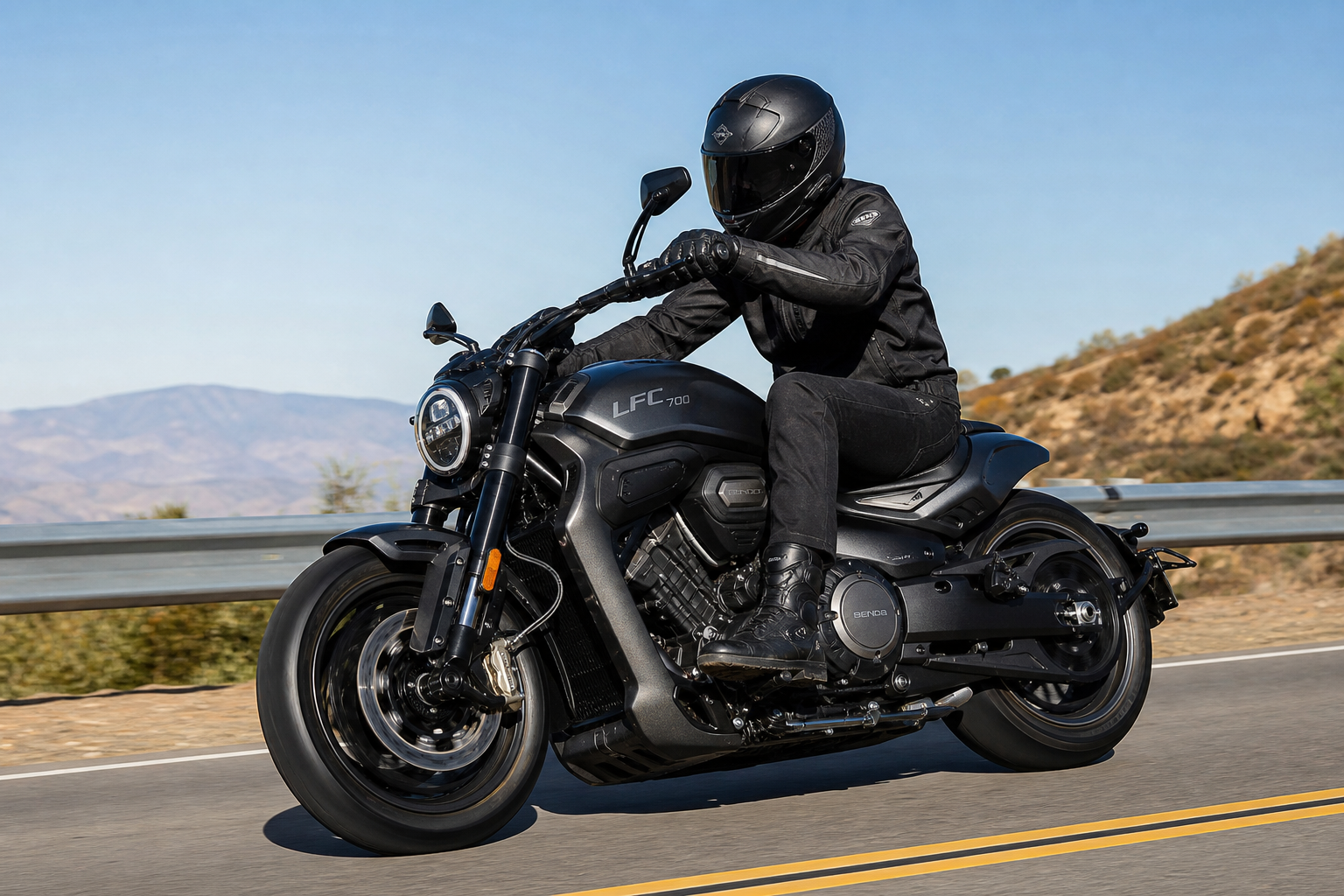
Opening: Why the LFC700 matters
The Benda LFC700 arrived in 2025–26 as more than a new model; it pushed a fresh argument into the middleweight cruiser and sport-cruiser market. It pairs a compact inline-four approach with cruiser ergonomics and high-end hardware that, until recently, were reserved for larger or more expensive bikes. That mix is what has dealers, press desks and product planners at mainstream marques paying attention.
Where the numbers sit (verified figures)
Manufacturers and early reviews place the LFC700 in a tight technical envelope. Sources list the motor at roughly 676–677cc inline-four, with peak output reported in the about 79–85 horsepower range depending on measurement and market tune. Reported peak torque values cluster near 60–63 Nm at around 8,000–8,600 rpm.
Chassis and dimensions that show up across official spec sheets and dealer listings include a 1,720 mm wheelbase, a 695 mm seat height, a 17‑litre fuel tank and a curb weight commonly quoted at 287 kg. Front suspension is a 41 mm KYB upside-down fork, braking hardware includes high-spec calipers listed under the Brembo umbrella with ABS, and the bike uses a multi-plate wet slipper clutch.
Those figures make the LFC700 a rare middleweight that carries an inline-four character while wearing cruiser boots—big rear contact patch, broad midsection and a mass that leans toward stability rather than flickability.
Visual tech: the engine and drivetrain
The LFC700’s engine packaging is tight. On paper it revs higher than typical cruisers, and the inline-four delivers a different power delivery than the V-twins many cruiser buyers know. The result is quicker top-end pull and a smoother, more even roll-on through the rev range.
Chassis, tyres and brakes — real-world handling notes
At road speeds the LFC700 feels deliberate. It is heavier than a naked 700-class sportbike, but that extra mass gives a planted feel over mid- to high-speed sweepers. The 310 mm wide rear tyre (as listed on official spec pages) is a design choice that prioritises traction and presence over instant direction changes. Expect a stable platform under power, and a small penalty when you try to flick quickly from edge to edge.
Brakes are strong and well-matched to the bike’s weight. The Brembo-sourced units with ABS provide confident stopping and allow late, firm inputs without the grabby or vague behavior sometimes found on lower-spec cruisers. Suspension compliance from KYB components balances support with enough compliance for broken pavement—a useful trait when the road surface is unpredictable.
How it upsets the market
There are three clear vectors of impact.
- Feature compression: The LFC700 brings premium hardware—USD forks, Brembo braking and a sophisticated slipper clutch—to a segment that previously saw those items mostly as upsells. That forces competitors to either raise their game or justify premium pricing with other benefits.
- Powertrain differentiation: An inline-four in a sport-cruiser package changes buyer expectations. Riders who want smooth, rev-happy performance now have a credible cruiser-flavored option without stepping up to a literbike.
- Segment crossover: The LFC700 blurs lines between naked, cruiser and sport-cruiser. That wide appeal draws customers who would otherwise buy from established players, increasing competition on spec and value.
What this means for major brands like Honda
Honda has long balanced broad product coverage with careful portfolio moves. The LFC700’s arrival tightens the midweight band where Honda’s smaller-displacement fours and its middleweight twins compete. Expect three likely responses: more aggressive spec-for-price moves, refreshed mid-capacity platforms with higher-spec components, or fresh product aimed specifically at keeping traditional cruiser buyers inside established model families.
Real-world ownership considerations
For the buyer the LFC700 is pragmatic and provocative at once. It offers a usable powerband, strong braking hardware and a confident chassis. But it also carries the compromises of weight and the maintenance footprint of a four-cylinder motor—valve checks, more complex cooling and higher service parts count compared with a twin.
Choose this bike if you want a middleweight with straight-line composure, rev-happy character and premium hardware. Consider a twin or a lighter naked bike if you prioritise low-speed flickability, ultra-low maintenance or maximum fuel economy.
Pricing and value pressure
Early market signals show the LFC700 priced to be competitive against segment leaders. That pricing strategy creates downward pressure on rivals and raises the baseline expectation for spec in the sub‑800cc cruiser/sport-cruiser class. Dealers will likely use that to reset trade-in values and promotional packages, and buyers benefit from more kit for the same money.
Service, parts and dealer network
Benda’s rapid push to expand distribution outside its initial markets will be decisive. The bike’s long-term appeal depends on decent aftersales support, straightforward parts availability and clear warranty terms. For riders in regions with sparse Benda presence, factory support and local knowledge will determine resale values and ownership satisfaction.
Final assessment
The Benda LFC700 is not merely another model arrival in 2026; it’s a strategic prod. It forces established manufacturers to rethink how they spec middleweight machines and how they price premium features. For riders, it opens a genuine option: a four-cylinder, rev-friendly cruiser that wears modern hardware and asks serious riders to reassess what a 700-class bike can be.
In short: it doesn’t replace the classics. It relocates expectations.
References: official Benda/Keeway specification listings and early road tests and reviews from specialist outlets. Reported numbers vary slightly by market tune and measuring method, so consult local spec sheets for the exact figures that apply to your market.


0 Comments