

Why this guide matters in 2026
Riding today is faster, denser, and more distracted than five years ago. On-road risk remains high: the NHTSA reports 6,335 motorcyclist fatalities in 2023, and federal data shows motorcyclists are killed at rates many times higher per mile than car occupants.
Simple survival steps still save the most lives. But a handful of often-overlooked tactics—small, repeatable choices—sharpen your margin for error. This guide isolates those tactics and gives you drills you can practice on weekdays and apply immediately on the street.
What “defensive” really means
Defensive riding is not passive. It's anticipatory and deliberate. You build buffer zones, force others to see you, and control the variables you can. Think of it as continuous risk reduction: body position, lane choice, throttle control, and proactive braking all stack to protect you.
Hard facts you must accept
Crash data shapes sensible tactics. Per-mile fatality rates for motorcycles remain far above passenger cars; recent analyses show motorcyclists face roughly 20–25 times the death risk per mile compared with car occupants. Studies also show technology helps: motorcycle ABS is associated with roughly a 22–31% reduction in fatal or injury crashes depending on the study and dataset.
Core equipment and mindset
Gear and attitude are the foundation.
- Protective kit: DOT/Snell/ ECE-rated helmet, CE-rated jacket and pants with armor, gloves, and strong boots.
- Pre-ride scan: Tires, brake lever feel, lights, and chain/belt tension before every ride.
- Mental checklist: Expect error from others. Assume you are the least visible vehicle on any trip.
Lane position rules most riders ignore
Lane position is your single biggest ongoing safety choice. Most riders default to the middle of the lane; that is often the worst place. Use the lane to increase your options.
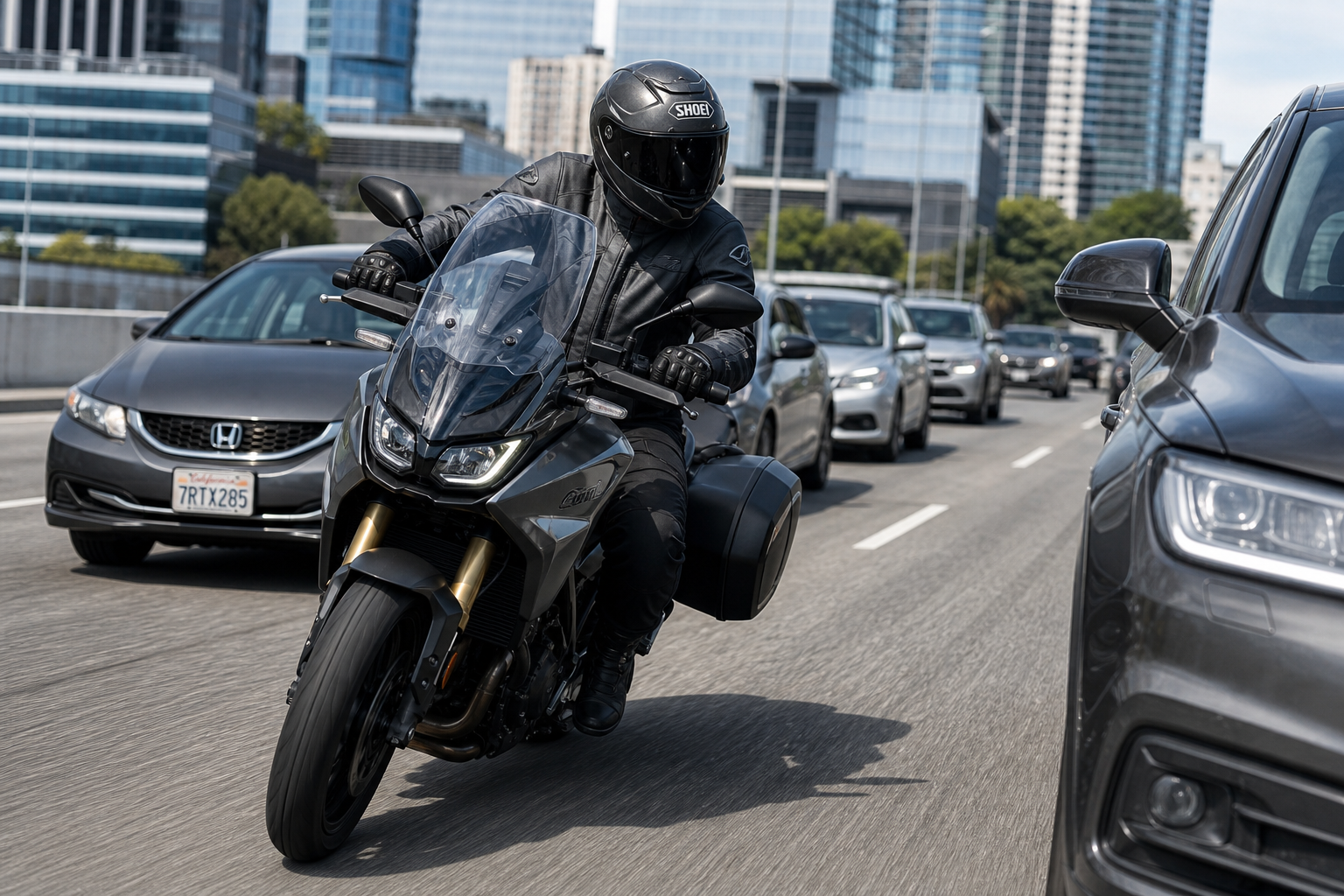
Primary rule: pick a position that maximizes your escape route while reducing conflicts. In multi-lane urban traffic, favor the left third of your lane to improve sightlines and reduce exposure to right-hook turns. On fast rural roads, pick the lane third that gives the best view through a corner and the cleanest road surface.
See farther, earlier
Long sightlines are defensive horsepower. Look at least 6–12 seconds ahead in traffic; on highways extend that. Spot brake lights, wheel steer, or head turns before they become threats. Constantly sweep mirrors and make short glances to the peripheral zone where doors open and parking lot cars pull out.
Micro-braking and threshold control
Full ABS is lifesaving, but you must still control the front brake up to the threshold in many scenarios. Practice progressive front braking so you can modulate rather than panic. The modern ABS systems are designed to prevent wheel lock while preserving maximum deceleration; you should trust them but not rely on them as a substitute for good technique.
Throttle as a safety tool
Throttle control is not just about speed—it's about balance and composure. Smooth, predictable throttle transitions reduce weight transfer and keep the front tire planted. If you need to change line or brake, roll off smoothly, stabilize, then apply braking input. Jerky throttle inputs cause unnecessary instability, especially on low-grip surfaces.
Fight for the right line—every intersection
Intersections are the single largest crash site for riders. Treat every intersection as hostile. When approaching, cover the clutch and both brakes with two eyes on cross traffic, one on mirrors. If a vehicle ahead slows to turn, move to the side of your lane to create visibility and a space cushion.
Escape-route planning
Before you commit to any lane, identify three escape options: left, right, and straight. If you can’t name them, you’re in the wrong spot. Use small lateral movements inside your lane to keep options open. This habit changes survivable outcomes when a driver suddenly drifts or a pothole appears.
Cornering defensively
Most street corner crashes are speed- and line-selection errors. Enter corners with a conservative entry speed and a plan: pick a sightline, aim for a safe apex, and be ready to widen if the road surface or oncoming traffic dictates. If you need to accelerate out, do it once the bike is settled and you have a positive sightline.
Night and low-visibility adjustments
Reduce speed and extend your following distance at night. Increase your conspicuity: use high beams when lawful, flash as you approach intersections, and wear reflective trim. In rain or fog, back off the throttle and be gentle on brakes—slick conditions reduce your margin for correction.
Group riding: defensive spacing and formation
In a group, two-second spacing is optimistic. Maintain a staggered formation but avoid blindly matching pace with others. Call out hazards early and agree on a straightforward hand/voice signal system before departure. Leaders set the tempo—choose conservative leaders and hold them accountable.
Practice drills you can do in an empty lot
Routine practice builds reflexes you can use when a car surprises you.
- Emergency stop drill: From 30–40 mph, practice firm front-brake application until ABS engages. Note feel; learn to apply power without grabbing.
- Evasive swerve: Practice a single smooth swerve around a fixed cone at moderate speed and then apply controlled braking.
- Slow-speed control: Ride a figure-eight at walking speeds to hone balance and clutch-throttle coordination.
Maintenance that protects you
Tire pressure and tread depth change handling dramatically. Check pressures cold and visually inspect tread and sidewalls weekly. Brake pad thickness, lever free-play, and hydraulic lines matter—degraded components amplify risk. A pre-ride five-point check becomes habit: tires, brakes, lights, controls, and fasteners.
How to measure improvement
Keep a short ride log. Note near-misses, how you reacted, and whether your chosen countermeasures worked. Track braking distances in drills and aim to reduce reaction time by measured amounts, not by guesswork. Real improvement is consistent, incremental, and recorded.
Putting it into one-week practice
Day 1: Gear check and basic slow-speed figure-eight for 20 minutes.
Day 2: Emergency stop drills with measured timing and noting ABS behavior.
Day 3: Urban lane-positioning routes—ride the same 15-mile route twice and try different lane thirds, recording visibility and options.
Day 4: Night ride with reflective gear focusing on reduced speed and increased scanning.
Day 5: Combine everything on a 60–90 minute mixed-traffic ride and review the log.
Final practical checklist
- Choose lane third intentionally.
- Always have three escape options.
- Practice progressive braking and trust—but verify—ABS performance.
- Use throttle smoothness to stabilize the bike.
- Keep routine maintenance strict; tires and brakes first.
Closing note from the saddle
Defensive riding is not a one-time lesson. It's the sum of tiny, deliberate choices made every mile. Do the drills. Tighten your checks. Ride as if today you must out-think three distracted drivers. That focus is what keeps you upright.


0 Comments