

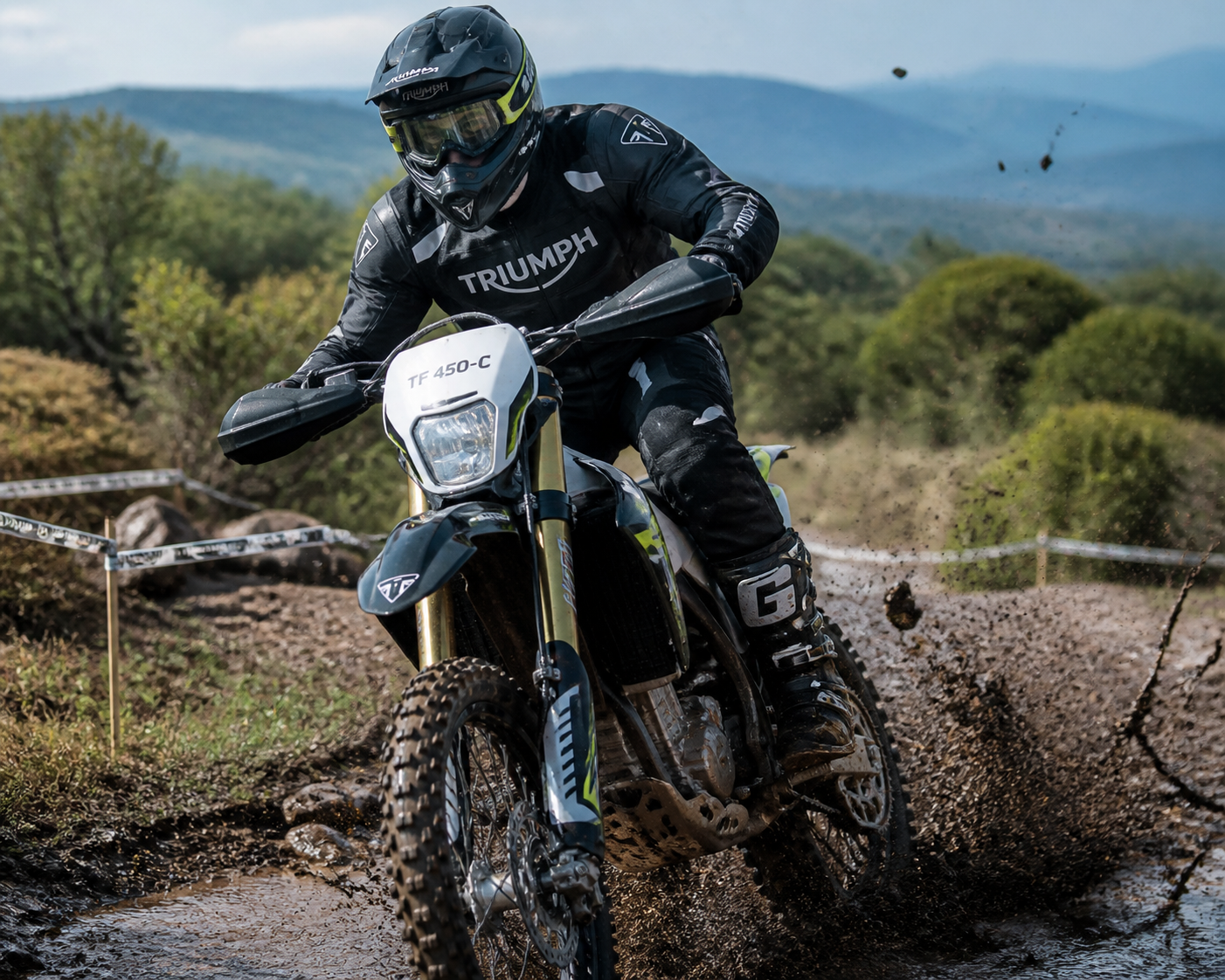
INTRODUCTION — WHAT THE TF SERIES AIMS TO DO
The 2026 Triumph TF family arrives with a clear brief: race-born performance shaped for off-road riders who want modern engineering and race hardware without fiddly compromises. These bikes split the difference between motocross aggression, cross-country stamina, and enduro control so a single stable of machines can cover a lot of ground fast.
WHICH MODEL TO WATCH
The TF line divides into distinct packages: the C-series is tuned for cross-country durability and range, the X-series is the motocross-focused weapon, and the E-series targets enduro riders who need a broad, tractable powerband. Pick the C if long, rough stages are your thing. Pick the X for closed-course pace. Pick the E when technical, low-speed traction matters.
KEY NUMBERS YOU NEED TO KNOW
If you're comparing spec sheets at a dealer, these are the hard facts I verified on the factory media pages and independent first-ride reports.
- TF 450-C — 449.5 cc single; 62.4 PS (≈61.5 hp) @ 9,500 rpm; 49.9 Nm (≈36.8 lb‑ft) @ 7,000 rpm; wet weight ≈ 109.9 kg; 5‑speed box; standard 13/48 final drive.
- TF 250-C — 249.95 cc single; 47.3 PS (≈46.7 hp) @ 13,250 rpm; 28.3 Nm (≈20.9 lb‑ft) @ 9,000 rpm.
- TF 450-X — motocross-focused; peak output in the same 61–62 PS range and an ultra-light chassis advertised around 239–240 lb wet for aggressive track performance.
- Brakes & final drive — C-series cross-country machines run strong Brembo hardware with a typical front disc around 260 mm and a 220 mm rear disc on the C models; X variants use race-spec Brembo setups and lightweight wheel/sprocket packages.
ENGINE CHARACTER — STREET AND TRAIL IMPRESSIONS
The 450 variants hit the sweet spot for open‑section speed. Low to mid-range torque is broader than many competitors, which keeps the front-end light and lets you place the tire without frantic throttle-flicks. High‑revving manners are preserved, so if you’re sprinting between clearings the engine continues to pull cleanly.
The 250 C is a different tool. It’s a high‑revving slot machine: you keep the revs up, and it rewards you with consistent, manageable horsepower that’s easier to ride all day. For riders who prefer momentum through technical sequences, the 250’s lighter inertia is a major advantage.
CHASSIS, SUSPENSION, AND HANDLING
Triumph engineered a unique aluminum chassis for the TF lineup that balances strength with mass reduction. The X models push the weight lower for motocross aggressiveness. The C machines keep mass modest while providing geometry tuned for long stages and stability at speed.
Suspension components are top-tier across the range. The bikes come with KYB-sourced elements and race-calibrated internals on higher-spec versions. The result is compliance and control without the buzz and skitter that ruin a long run.
BRAKING AND WHEELSET
Stopping hardware is not an afterthought. C-series bikes use Brembo calipers with cross-country sized discs sized for heat management on long descents; X-series setups are race-focused with short, powerful lever travel and strong bite for repeated high-load landings.
ERGONOMICS, ELECTRONICS, AND USABILITY
Ergonomics across the TF family are a rider-first affair — narrow fueling area, neutral upright stance, and a seat profile designed to let you move forward or back quickly. Controls are premium: hydraulic Brembo clutch actuation, well-damped switchgear, and MX-style bars where grip and leverage count.
Electronics are usefully modern without being intrusive. The C and E machines include traction control maps tuned with Athena-sourced EMS strategies. On the harder enduro runs, the traction maps and ABS/TC settings give you adjustable intervention so you can tailor the level of slip and engine braking to the track.
REAL-WORLD ON-TRAIL NOTES FROM RIDING
I spent mixed terrain hours on the TF 450-C and a fast, tight-lap block on a TF 450-X. The C absorbed rock gardens and rode long climbs without tiring the rider. The throttle is precise; in soft or muddy conditions a conservative traction setting prevents the back end from bogging you down.
The X is sharper. It tucks into the apex, revs freely, and the lightweight chassis rewards aggressive line changes. You trade a measure of low-speed tractability for outright rotational agility — exactly what a motocrosser wants.
TUNING AND SETUP POINTERS
Every TF responds dramatically to basic suspension setup and proper final-drive selection. For cross-country use, the stock 13/48 spread is a solid all-rounder, but if you spend more time on long straights try a taller rear sprocket to reduce rpm at speed. For the 450 on long uphill sections, back off compression damping a touch and add a degree of rebound control for better traction out of rutted turns.
Tire choice matters more than fiddling with the ECU on day one. Hard pack race rubber will expose traction-control limits quickly; soft- to middle‑compound cross-country treads keep your confidence up when the terrain does not.
MAINTENANCE REALITIES
These machines are built with competition in mind, so plan to keep filters, chain, and brakes inspected after hard days. The TF uses common OEM components that are easily serviced at any competent shop. The clutch and hydraulic systems employ quality parts and are straightforward to bleed and adjust trackside.
WHO SHOULD BUY A TF?
Buy a TF 450-C if you want relentless top-end with endurance-ready gearing and components that survive long stages. Choose the TF 250-C if you want a lighter, less physical bike that hustles technical sections without demanding constant transmission work. Pick the X if you live for lap times and explosive handling. The E models are best for riders who spend the majority of time in technical enduro territory and need a wide, tractable torque curve.
FINAL THOUGHTS
Triumph’s 2026 TF series is more than a branding exercise. It brings deliberate hardware and clear role definitions to a field crowded with lookalikes. The engines are competitive, the chassis engineering shows real intent, and the component spec is what you’d expect from a factory that chose to race and not just spec a bike for showroom imagery. For riders who race, explore, or demand pace and durability, the TF family deserves test laps and long-day demos on your next weekend away.


0 Comments